














Turning and milling centre by Kraffter Machine Tools
The 5-axis turning and milling centres offer significant benefits for the production of complex shapes or 3D contours that cannot be achieved with 4 or 5 axes or with conventional lathes or CNC lathes.
They allow all sides of a part to be machined in a single clamping, thanks to two additional rotary axes. Also equipped with high-capacity tool magazines and sometimes pallet changers, they offer increased autonomy for sequential operations. This often eliminates the need to move or reposition the workpiece during machining, which improves process speed and geometric quality (coaxiality, concentricity, etc.) and eliminates repositioning errors. This makes them particularly attractive for meeting current productivity challenges in the aerospace, medical and mould & tooling industries.
FAQ :
What is a turning-milling centre and what is it used for?
A turning and milling centre is a CNC machine tool capable of combining turning and milling in a single clamping operation. In simple terms, it allows complex parts – cylindrical, prismatic or completely irregular – to be machined without having to be dismantled or moved from one machine to another. The result: time savings, maximum precision and reduced handling.
These machines are often referred to as multitasking machines because they can do everything: drilling, boring, surfacing, chamfering, threading, grooving, turning internal or external diameters, and even machining 3D shapes. All this is done with a numerical control that manages the linear and rotary axes, spindles and tools in real time. These centres are highly sought after in the aerospace, medical, automotive and general mechanical engineering industries, where precision and productivity are key.
Whether for mass-producing a simple part or machining a technical component with complex geometry, the turning-milling centre is now an essential ally in modern machining.
Different types of turning-milling centres (3, 4, 5 axes, multi-tasking)
Turning-milling centres are available in several configurations depending on the number of axes and integrated functions:
3 axes: These are generally CNC lathes equipped with motorised tools for simple milling operations. They feature the linear X and Z axes for turning, as well as a C axis on the spindle for indexing the workpiece in rotation for drilling or side milling. This basic configuration already offers machining options without repositioning by combining turning and a few milling operations.
4 axes: In addition to the X, Z and C axes, these machines generally incorporate a Y axis. The Y axis allows the tool to be offset from the axis of rotation, enabling more complex off-centre milling or drilling operations (grooves, off-axis drilling, etc.). This configuration offers greater flexibility than a 3-axis machine, without reaching the complexity of a true swivel head.
5 axes: Combine 3 linear axes (X, Y, Z) and 2 additional rotary axes (often referred to as A and B, or B and C) to enable simultaneous machining on 5 axes. In practical terms, the pivoting of the machining head (B axis) and continuous rotation of the workpiece (C axis) are added, which facilitates the shaping of workpieces with very complex geometries in a single clamping. They thus perform multi-axis turning and milling on a single machine, with the possibility of tilting the tool or workpiece to machine at different angles.
Multitasking machines: The term multitasking refers to the most versatile turning and milling centres, combining several functions and often equipped with multiple machining elements (double spindle, multiple turrets, swivel head). This equipment combines the functionality of a machining centre (milling) and a conventional lathe in a single machine. It often incorporates several axes, spindles and tools to perform a wide range of operations (turning, milling, tapping, cutting, drilling, threading, etc.) with great flexibility. Their multi-tasking capability is ideal for machining a complete part without reworking, making them attractive for workshops looking to increase productivity and optimise space. After all, why purchase several machines when one can do the job by combining all the processes?
COMMON TECHNICAL FEATURES OF TURNING AND MILLING CENTRES
From a technical point of view, these machines combine the key elements of a lathe and a CNC machining centre.
Common features include:
Main spindle: This is the heart of the turning process. The spindle holds the workpiece (chuck or collet) and provides high rotational speeds for turning operations. The main spindle is powered by a powerful drive system (electric spindle) and can rotate at speeds typically ranging from 3,000 to 6,000 rpm depending on the diameter and power required. Many also incorporate a counter spindle (or second spindle) opposite the main spindle, allowing the workpiece to be picked up on the other side to machine its second flank without dismantling. Each spindle is equipped with a CNC C axis that allows it to be positioned with fine angular precision (0.001°), which is essential for synchronising milling operations.
Tools and tool magazine: When it comes to milling, there are two approaches. The most advanced centres feature a swivel milling head (B axis) with an automatic tool changer (ATC), similar to a machining centre. With this high tool capacity, it is child's play to chain multiple operations without human intervention. On more compact centres, there is usually a motorised tool turret that can perform more limited milling operations; in this case, the turret incorporates a fixed number of rotating tools (e.g. 12 motorised tools) instead of a separate magazine. Regardless of the architecture, the rotational speed of milling tools frequently reaches 5,000 to 12,000 rpm, and the milling power can vary from ~10 kW on medium-sized machines to over 20 kW on heavy-duty models.
Working strokes and machining capacities: The X, Y, Z movements determine the machinable volume. On a medium-sized turning and milling centre, you will typically find 400–500 mm X travel, 150–250 mm Y travel and 800–1300 mm Z travel. The turning capacity (maximum machinable diameter and length) depends on the design of the frame: a compact model such as the NTX1000 turns parts up to ~Ø370–430 mm in length, while a Biglia Smart Turn 1200 allows Ø750 mm in sweep for ~1250 mm in length. These values influence the choice of machine depending on the size and weight of the products to be machined.
Numerical control (CNC): The complexity of these centres requires a powerful CNC capable of managing the simultaneous interpolation of multiple axes. Manufacturers generally offer a choice of several recognised industrial CNC controls, including Siemens and Fanuc, or even proprietary CNC systems. The CNC also manages advanced features that are essential on these centres: axis synchronisation (e.g. tracking the C rotation for rotary milling), tool changer management, integrated measuring probes, etc.
For which industrial applications should a turning and milling centre be preferred?
Turning and milling centres are used in many demanding sectors thanks to their versatility and precision:
- In the aerospace industry, for example, a turning and milling centre can machine parts such as turbine components and complex structural parts made of light alloys (jet engine blades, organically shaped hydraulic blocks, etc.) in a single operation.
- In the medical sector, the ability to combine turning and milling ensures the precise manufacture of anatomical shapes (hip, knee, dental implants) with an excellent finish.
- The automotive sector uses them to produce high-precision components, engine parts (shafts, transmission housings, injectors, etc.), moulds and complex prototypes in large series, where speed of execution makes all the difference.
- In agricultural machinery and energy, they are used to machine large products (valve bodies, pump parts, transmissions) in a fully automated manner.
- Not to mention the railway, energy, space and general mechanical engineering industries, etc. In short, whenever an industry requires the high-speed machining of complex or high-precision components, turning and milling centres are the preferred solution.
Renowned brands in the sector (DMG MORI, OKUMA, BIGLIA, etc.)
In the world of turning and milling machining, certain brands have built a solid reputation among professionals.
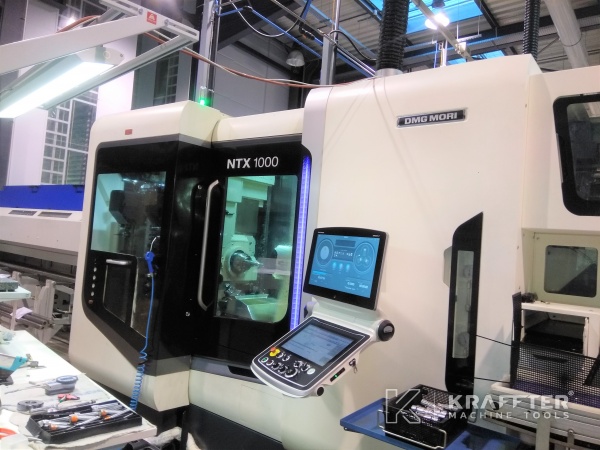
The manufacturer DMG MORI is one of the undisputed world leaders, the result of a merger between the Japanese company Mori Seiki and the German company Gildemeister. This German-Japanese group is ranked among the Top 3 best CNC machine manufacturers in the world. It is renowned for its innovative solutions (5 simultaneous axes, integrated automation, hybrid metal 3D printer, etc.) and the high quality of its products. DMG MORI centres (NTX, NT and CTX series, for example) are highly regarded in the aerospace, medical and micro-mechanical sectors for their precision and reliability.
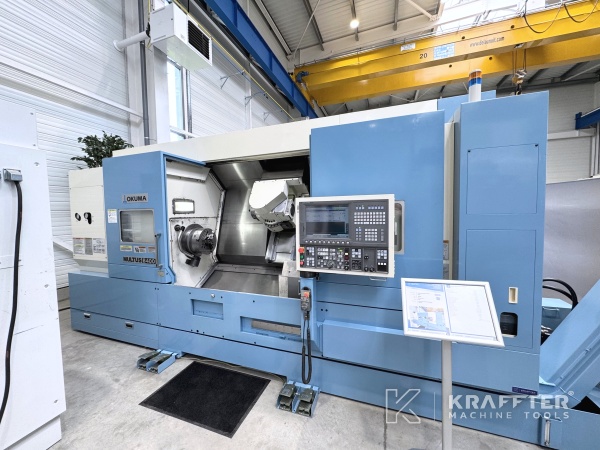
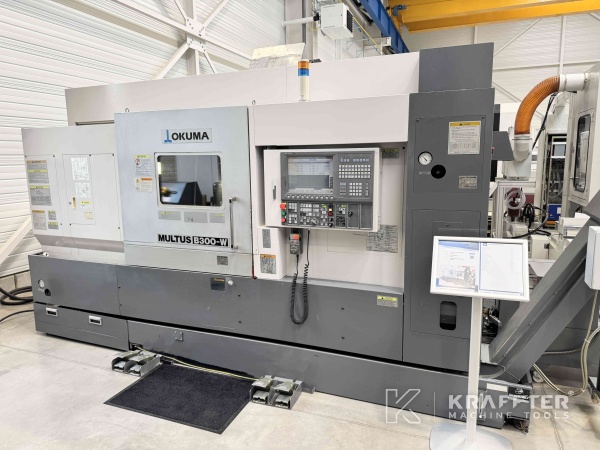
Another major manufacturer, the Japanese company OKUMA is one of the most renowned historical manufacturers of machine tools (alongside Mazak, Mori Seiki, etc.). Okuma is renowned for the robustness of its Multus and MacTurn multifunction lathes, as well as for its unique approach of developing its numerical controls (OSP) in-house. Okuma machines are distinguished by their excellent thermal stability and high rigidity, which make them highly efficient in intensive machining. Okuma has a strong presence in the automotive and energy sectors, where its machines ensure reliable 24/7 production.
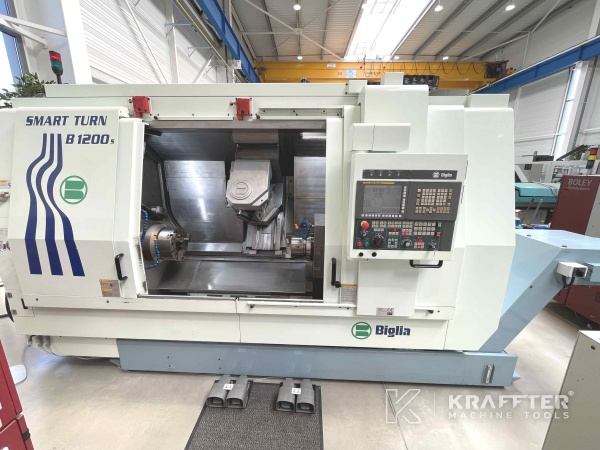
On the European side, the manufacturer BIGLIA has established itself as one of the Italian leaders in CNC lathes. Biglia is renowned for its robust and innovative twin-spindle lathes and multi-tasking centres. The Smart Turn range illustrates Biglia's expertise in integrating 5-axis milling into traditional lathes, offering SMEs and large companies productive solutions at a cost that is often lower than that of German and Japanese machines. Biglia machines are widely used in Europe and are valued for their mechanical reliability and the use of recognised standard components (Fanuc controls, etc.), which provide reassurance in terms of long-term maintenance. In short, the market is dominated by a handful of internationally renowned manufacturers who guarantee proven service and expertise, which is an important criterion for manufacturers when making investments.
Turning-milling: What are the leading models?
The Mori Seiki NTX1000 SZ (first generation NTX) is a compact, high-end machine that combines a 5-axis B-axis head and a turret to maximise the number of tools available (76 in the magazine + turret tools) and simultaneous machining. Its dual-spindle/dual-tool design allows, for example, parallel machining on a main component and another on the counter-spindle to reduce downtime.
The second-generation DMG MORI NTX 1000 embodies the current state of the art: it incorporates DMG MORI's improvements in terms of ergonomics (CELOS interface on touch screen), high milling speeds (12k or even 20k rpm) and automation (possible integration of robots or pallet systems). Its highly rigid monoblock construction makes it the preferred choice for high-precision production (e.g. medical implants or small aerospace components).
The Okuma Multus B300-W opted for an architecture without a lower turret but with maximum rigidity on the B head and excellent precision. Okuma relies on its in-house OSP control and thermal balancing technology (Thermo-Friendly) to guarantee high dimensional stability.
The Biglia Smart Turn B1200S stands out for its greater machining capacity (parts up to 1.26 m) and high turning power (30 kW spindles): it is a model designed for large turned parts, which is highly appreciated in general engineering in Europe. Biglia has equipped this model with a high-performance 5-axis head while retaining the Fanuc interface familiar to workshops – an effective compromise between innovation and ease of use.
Each of these models illustrates different technological choices (double turret vs. single head, priority to compactness vs. capacity), allowing users to select the machine best suited to the specific characteristics of their products (size, weight, complexity, etc.) and their production organisation.
Used turning and milling centre: availability and purchasing advice
Availability of used machines:
In France and Europe, specialist used machine dealers regularly offer multi-tasking centres from leading brands, guaranteeing reliable traceability. Kraffter Machine Tools has an up-to-date stock of used turning and milling centres from all brands (DMG MORI, OKUMA, BIGLIA, etc.).
Advantages and disadvantages of buying used:
There are several advantages to purchasing a used machine.
The first is obviously the lower cost compared to a new machine: a well-chosen used machine can offer performance close to that of a new machine at a much lower price. This allows a company to access 5-axis multi-tasking technology that it might not have been able to afford new, or to increase its production capacity at a lower cost.
Another advantage is immediate availability: while a new machine may require manufacturing and delivery times (several months), a used machine is in stock and can usually be delivered quickly, which can be crucial in responding to a surge in activity.
On the downside, the main risk is related to the technical condition of the machine. A used machine has a history (production hours, possible impacts, wear and tear) that can lead to breakdowns or inaccuracies if it has not been well maintained. It is therefore important to ensure that the machine has been properly reconditioned by a specialist and reputable used machine tool dealer who is capable of carrying out the necessary work (mechanical, electrical, pneumatic and hydraulic work) before sale.
Criteria to check before purchase:
Before finalising the purchase of a used turning and milling centre, it is strongly recommended that you carry out a full inspection of the machine. Ideally, you should see the machine in operation at the seller's premises. This will allow you to check that the axes, spindle, tool changer, lubrication, etc. are working properly. Points to check include: axis play (backlash, wear on ball screws and guides), geometry (if possible, test a part to check the accuracy obtained), the condition of the spindle (listen to the bearings at high speed, check for play), the condition of the turret or B-head (repeatability of the pivot, locking), and the smooth operation of tool changes. You can also consult the number of machining hours on the counter.
Once these checks have been carried out, you can make your purchase with peace of mind and full knowledge of the facts.
Kraffter Machine Tools, the specialist retailer of used machine tools:
Given the complexity of these machines, many manufacturers turn to used equipment specialists to buy or sell their turning and milling centres. In France, Kraffter Machine Tools is a specialist in the international trade of used machine tools. There are two advantages to calling on our expertise: firstly, we know the market prices and can advise on the choice of model best suited to your needs and budget; secondly, we offer comprehensive support to the buyer in terms of logistics (which is a real specialist area).
By going through an expert, you minimise the risk of buying a machine in poor condition, as we will have inspected it and, if necessary, upgraded it.
Turning and milling centres are strategic machines for improving productivity and versatility in machining. By opting for reconditioned equipment, industrial companies now have a wide range of solutions for integrating multi-tasking machining. Please do not hesitate to contact us for advice, personalised quotes and offers tailored to your specific needs. (And also to sell your machine.)
Turning-milling centres represent a significant investment, but one with potentially enormous benefits in terms of time savings, quality and competitiveness in your markets.