













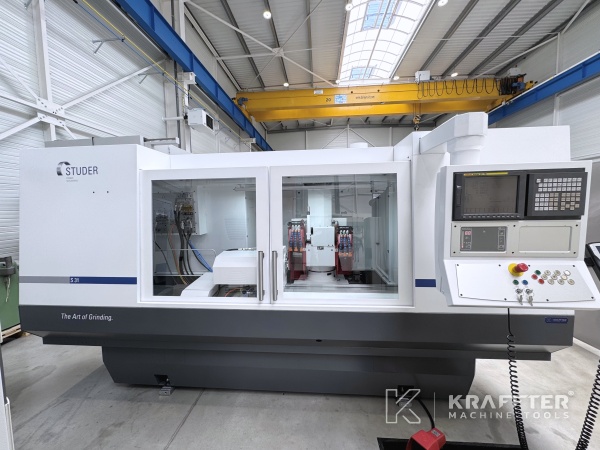
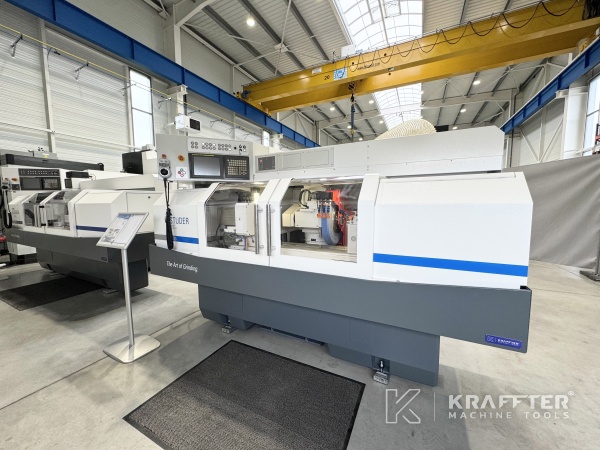
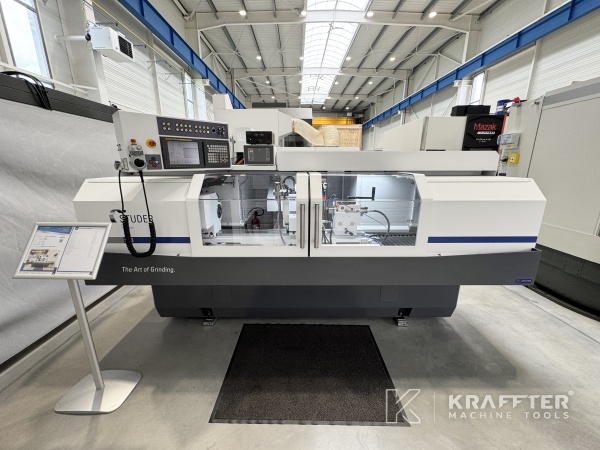

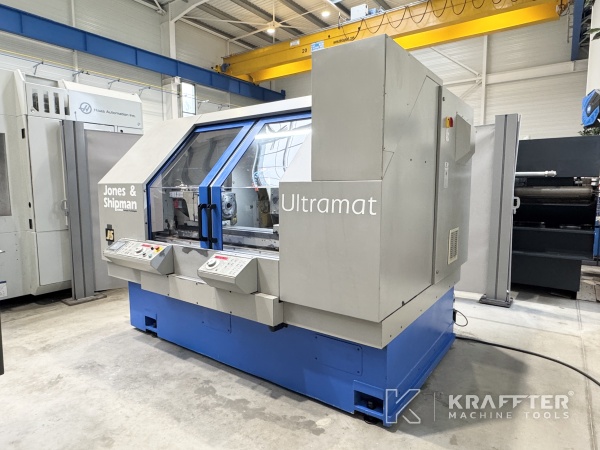
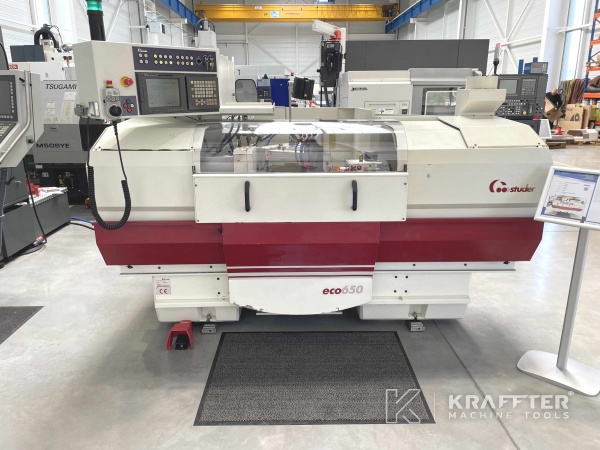
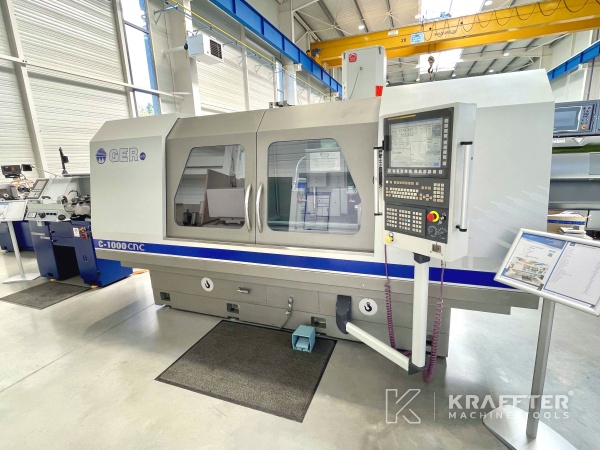
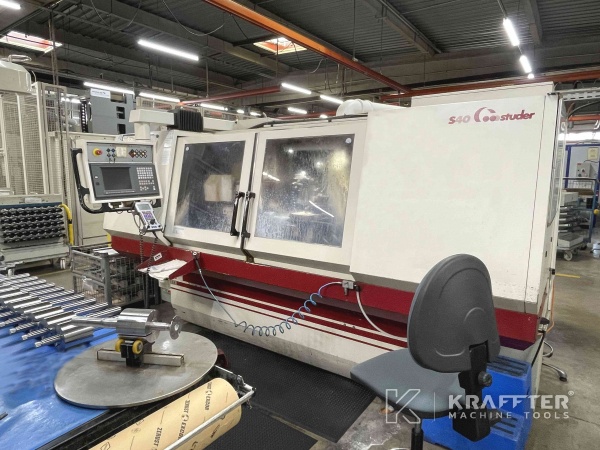
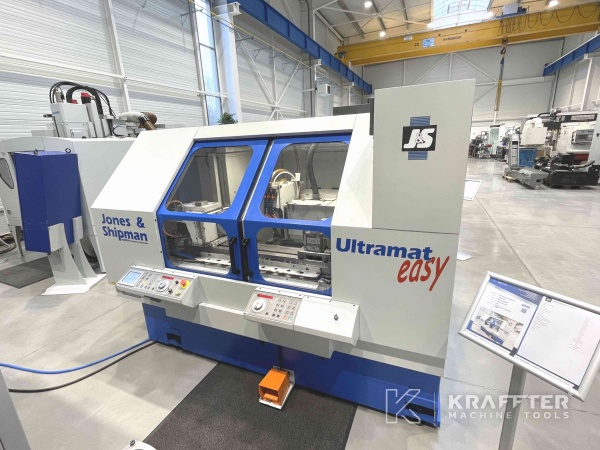
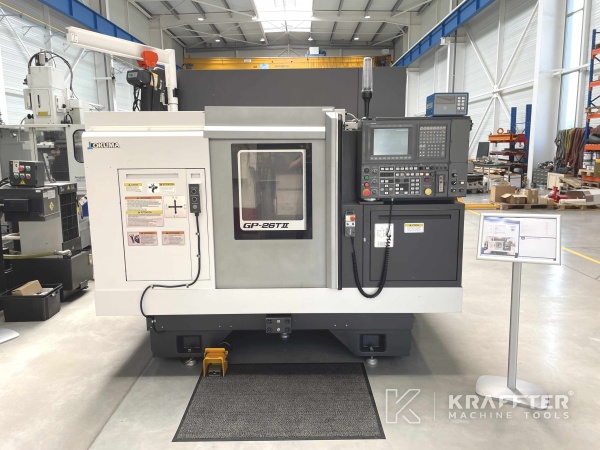
Used machinery, CNC Cylindrical grinder, a world of precision in the workshop
A CNC cylindrical jig grinder is a machine tool used for the processing of rotationally symmetrical workpieces. Together with surface jig grinders and CNC jig grinders, they represent the pinnacle of precision in mechanical machining. Although jig grinding is an expensive operation, it offers considerable advantages for precision machining and finishing, which justify its use in many demanding industrial applications. Intended to improve the surface finish or dimensional accuracy of a part, it occupies a central place in the factories of cutting-edge industrial sectors such as aeronautics, automotive, medical and micromechanics.
FAQ :
How does a jig grinding machine work?
CNC cylindrical grinding is a machining process that removes material to produce cylindrical surfaces with very high dimensional and geometric precision. Unlike turning and milling, which use cutting tools with a cutting edge, the grinder uses an infinitely more precise abrasive wheel that rotates at very high speed. The workpiece is also rotated parallel to the grinding wheel and the two combined movements, together with the forward motion of the grinding wheel, remove material in the form of very fine (thousandths of a millimetre) and very hot shavings. The numerical control (CNC) allows for precise control of the movements of the machine axes and the parameters, thus guaranteeing high quality and repeatability of the machined elements. This is the case even with hard materials, which are considered difficult to machine, and incredibly low dimensional tolerances.
Although a distinction is commonly made between two types of cylindrical grinding, external cylindrical grinding and internal cylindrical grinding, most CNC cylindrical grinders are so-called ‘universal’ grinders. This means that they are capable of performing both types of grinding. Universal cylindrical grinders are therefore highly versatile, enabling them to perform a wide variety of operations in a single workpiece clamping.
What are the advantages of using a cylindrical grinder?
What are the advantages of using a cylindrical grinder?
Cylindrical grinding, whether conventional (non-CNC grinding family) or CNC, offers a unique combination of precision, surface quality, repeatability and ability to machine hard materials, making it a finishing machining process of choice for the most demanding applications. Because, although it is an expensive operation, its characteristics are crucial in industries where the conformity and reliability of parts are paramount.
- The quality of the surface finish of a part can be expressed as a factor of the smallest chip. The smaller the chip, the smaller the quantity of material removed and the more precise the jig grinding.
Unlike conventional machining by chip removal (milling or turning), where heat is controlled to preserve the cutting tool, jig grinding generates chips at a very high temperature which are effectively evacuated without altering the grinding wheel, which is very resistant to heat. This thermal control contributes to the improvement of the surface finish and the high mechanical quality of the parts. With dimensional tolerances in the order of a micron, CNC cylindrical grinders are 10 times more accurate than conventional machines.
Precision, for its part, is ensured by several factors: the rigidity of the machine, in particular thanks to cast iron frames, such as the mineral cast iron Granitan® S103 used by STUDER, CNC controls and high-precision measuring tools. In addition, the formation of extremely small chips, in the order of a thousandth of a millimetre, allows for very precise material removal.
Excellent reproducibility is also ensured thanks to automation via numerical control (CNC), machining parameters such as the speed of rotation of the grinding wheel and the headstock, the feed, the depth of cut and the movements of the machine are precisely controlled and reproducible. This automation, coupled with the rigidity of the machine and the precision of the cut, minimises variations and guarantees consistent quality of the parts produced, batch after batch.
Finally, CNC cylindrical jig grinding allows the machining of hard materials. The abrasive used for the grinding wheel and its resistance to heat enable the machining of very hard metal components, including hardened materials and carbide tools. In addition, as the heat generated is mostly removed with the swarf, there is little deformation of the material due to heat (however, attention must be paid to the deformation of components with a low diameter to length ratio).
- Conversely, it is important to avoid machining metals that are too soft, such as brass or aluminium, because the shavings have an unfortunate tendency to stick and damage the grinding wheel.
What operations can be carried out by cylindrical jig grinding?
INNER CYLINDRICAL GRINDING:
Inner cylindrical grinding is an operation that consists of grinding the inside of a cylindrical, conical or complex part, such as a bore or a hole. The abrasive wheel, which is smaller than the inside diameter, is mounted on a shaft to be inserted into the rotating part.
An internal cylindrical grinder is used in the manufacture of bearings, bushings and precision bores for tight fits.
EXTERNAL CYLINDRICAL GRINDING:
Unlike internal grinding, this operation grinds the outer surface of a cylindrical part. The external cylindrical grinder keeps the part rotating between centres (centreless jig grinding) or in a chuck (chucking operation), while the rotating abrasive wheel comes into contact with its surface. Depending on the material and the desired part, the wheel can plunge once or several times, sweep or combine these two operations.
An external cylindrical grinder is used in many industrial processes involving precision mechanics, automotive and aeronautics for the jig grinding of shafts, axles, pistons, cylinders, etc.
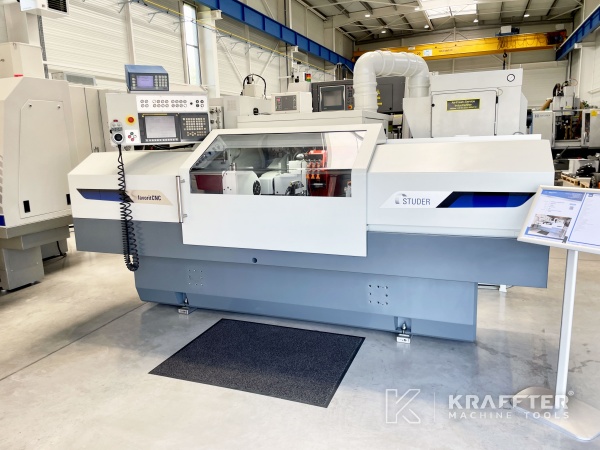
There is a category of machine tools specific to this type of machining. The conventional cylindrical grinder S20 Favorit from STUDER eliminates the superfluous to focus on precise and efficient external grinding at a competitive price. It is the ideal solution for standard applications in small and medium-sized enterprises.
angle grinding:
Jig grinding is a technique used to grind the face perpendicular to the axis of a cylinder. The grinding wheel of the numerically controlled cylindrical grinder moves perpendicular to the axis of the rotating part to grind the surface, creating a precise shoulder. It is used to machine precise bearing surfaces for bearings, gears or other components.
CONICAL GRINDING:
This operation enables conical surfaces, internal or external, to be ground. The angle of the grinding wheel and/or the workpiece is adjusted to obtain the desired conicity. The grinding wheel performs a rotating and advancing movement. Grinding is used to manufacture conical parts such as Morse taper, conical cutting tools or valve seats, but also for operations such as chamfering.
DIP GRINDING:
In this machining process, the grinding wheel is brought radially towards the rotating part, without any longitudinal feed movement. The grinding wheel ‘plunges’ into the material until the desired dimension is reached. The shape of the grinding wheel is generally complementary to the shape of the part to be ground; if it is non-linear, it is referred to as form plunge grinding. It allows the machining of complex shapes, grooves, slots, special profiles, etc.
SURFACE GRINDING (OR PLANE GRINDING):
Cylindrical grinders can be used to grind all the faces of a cylinder. Surface grinding is the generic term that encompasses all forms of machining of flat surface grinding, whether horizontal, vertical or inclined.
Components of a CNC cylindrical grinder
Frame and structure of cylindrical grinders:
The base and structure of a CNC cylindrical grinder are the basis of its precision. Maximum rigidity is sought to reduce vibrations and thermal deformations, which can affect the quality of jig grinding. This is why the base is generally made of cast iron, a material recognised for its ability to absorb vibrations, or very rigid composite materials such as granite composites or filled polymers.
Thermal stability is another crucial factor in the design of the frame. Momentary variations in temperature can cause the machine components to deform, which affects machining accuracy. The frame materials therefore have a low coefficient of thermal expansion and its design tends to minimise heat exchange with the environment. This maintains the dimensional accuracy of the parts, even during prolonged grinding operations.
Tables and axes of movement
The tables and axes of movement are used to position the part and the grinding wheel precisely. The cross tables, which move along the X and Y axes, ensure horizontal positioning. The vertical axis, or Z axis, controls the vertical movement of the wheelhead or table. They are equipped with high-precision linear guides and precision ball screws.
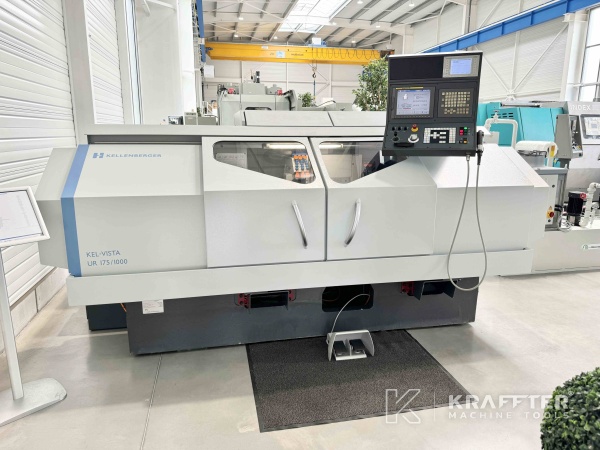
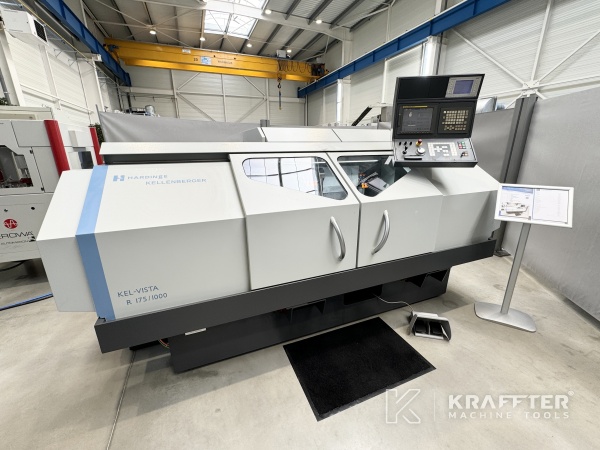
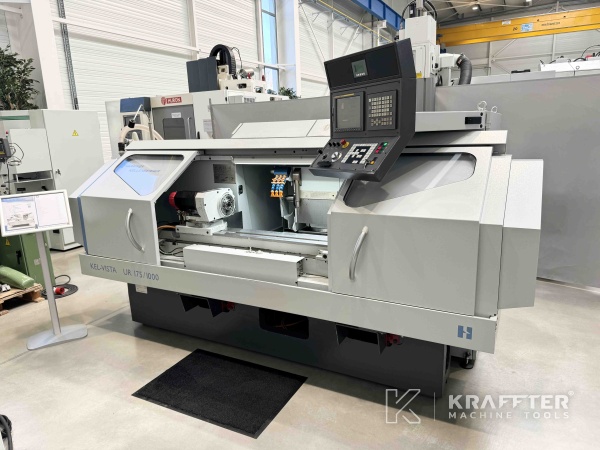
Some universal cylindrical grinders, such as the Kellenberger Kel-Vista UR 175/1000, incorporate rotary axes known as A, B and C axes. Fitted with high-resolution rotary encoders, they enable the workpiece or grinding wheel to be rotated.
Spindle and wheelhead
The wheelhead supports and drives the abrasive wheel in rotation, with a high-precision spindle controlled by the CNC for feed movements.
Attached to the wheelhead, or to a rod in the case of internal jig grinding, the grinding wheel spindle is the element that drives the abrasive wheel in rotation. It must reach high rotational speeds to optimise the efficiency of the jig grinding. The rigidity and precision of the spindle are essential to minimise vibrations and ensure precise concentricity of the grinding wheel.
The workpiece holders, fixed and mobile, and fixing devices
The heads ensure the precise positioning and rotation of the element to be machined. The fixed head holds one end (by fixed centre or chuck), while the mobile head (tailstock) supports the other end with a mobile centre and constant pressure via a spring. Their rigidity is essential for precision and minimisation of vibrations.
Various fixing devices can be used, such as chucks, vices or specific mountings, depending on the shape and dimensions of the part. Steadies (or steady rests) are used, for example, to support long parts and prevent them from bending under the cutting forces.
Abrasive wheels
Abrasive wheels are the cutting tools used in jig grinding. They are made up of different abrasives, such as aluminium oxide (corundum), silicon carbide, cubic boron nitride (CBN) or diamond. The choice of abrasive depends on its cost, in relation to the material to be ground and the finishing requirements.
Measurement and control system
The measuring and control system ensures the dimensional accuracy of the ground components. Measuring sensors can be integrated into the machine to measure the dimensions during machining and adjust the jig grinding parameters accordingly. The CNC control system, such as the high-performance FANUC 0i-TD, coordinates the movements of the various axes and manages the jig grinding parameters via a computer or control panel.
Cooling and filtration system
A coolant is used to control the temperature of the machined element and the grinding wheel, remove shavings and improve the surface finish. A filtration system is necessary to eliminate abrasive particles from the coolant and maintain its effectiveness.
Cylindrical grinding and its industrial applications
Cylindrical grinders such as the Kellenberger 100, a high-precision CNC cylindrical grinder, are indispensable tools for meeting the production needs of many industrial sectors, particularly those requiring extreme precision, flexibility and unrivalled surface quality.
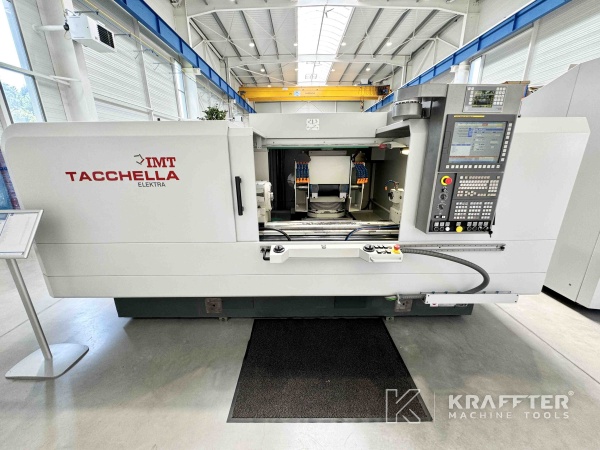
In the automotive industry, the cylindrical grinder, and more particularly the universal cylindrical grinder that allows internal and external grinding, is essential. Machine tools such as the TACCHELLA ELEKTRA UA 1200 come into play in the complete jig grinding of engine components such as camshafts, crankshafts, pistons and cylinder liners, ensuring their proper functioning and tightness. It is also used in the production of drive shafts, universal joints, injectors, injection pumps and bearings.
The aeronautics and space industries use CNC cylindrical jig grinding for turbine shafts, compressors, high-precision bearings, landing gear components and rocket engine components. In view of the (astronomical) costs of the materials and machined components, machines such as the GER C_1000 CNC are used where the requirements for precision and reliability are at their highest.
In general mechanics, it is used for the manufacture of shafts, axles, spindles, cutting tools, moulds, dies, linear guides and hydraulic and pneumatic cylinders.
The bearing industry benefits from jig grinding to optimise the service life and performance of inner and outer rings, rollers and balls. The medical sector uses it to manufacture implants, prostheses and surgical instruments, guaranteeing biocompatibility, functionality and sterilisation.
Finally, other industries such as textiles, paper, printing and the manufacture of precision tools also use jig grinding for various applications requiring very tight dimensional and geometric tolerances.
Rely on the second-hand market to buy a CNC cylindrical grinder
The acquisition of a CNC cylindrical grinder represents a significant investment for any machine shop. Coveted for their exceptional performance, these machines nevertheless suffer from a high purchase cost, which can be a barrier for many companies. Faced with this financial obstacle, the market for second-hand cylindrical grinders offers a relevant and advantageous alternative.
To overcome this difficulty and make it possible to acquire a high-performance production tool, companies such as Kraffter Machine Tools specialise in the sale of used machine tools, particularly second-hand CNC cylindrical grinders. This approach makes it possible to acquire a fully refurbished machine that offers performance comparable to a new model, but at a considerably reduced price. Opting for a reconditioned second-hand CNC cylindrical grinder is therefore an economical and reliable solution for precision machining professionals. (They are also available immediately! Unlike new machines, which can take many months to be delivered)
Brands renowned for the quality and durability of their machine tools, such as CNC cylindrical grinders KELLENBERGER, TACCHELLA, JONES & SHIPMAN and CNC cylindrical grinders STUDER are often available on the second-hand market.
Reconditioning process for second-hand CNC cylindrical grinder
Full inspection:
As soon as a cylindrical grinder is received in our workshop, we carry out an in-depth diagnosis, followed by a full cleaning of the machine and its peripheral equipment.
Cleaning and replacement of worn parts:
The mechanical, hydraulic, pneumatic and electrical systems are fully overhauled. If necessary, we use our own machine tools to remanufacture the parts needed to restore conformity.
At the same time, worn or defective components, such as ball screws, linear guides, axis drives, spindles, mechanical wear parts and electronic components, etc. are replaced.
Geometric inspection:
Each of our machines is delivered with a geometric control report certifying that its performance complies with the manufacturer's original specifications.
Packaging and delivery:
Finally, on request, we manage all of the logistics, including customs formalities, transport and machine handling.
How do I buy a used CNC cylindrical grinder?
Buying a used CNC cylindrical grinder can be an interesting economic solution, but it is crucial to carry out a thorough inspection of the machine before any acquisition. This approach requires specialised expertise in order to assess the general condition of the equipment and to ensure that it is properly suited to specific production needs.
Essential points to check when buying a second-hand cylindrical grinder
Buying a second-hand cylindrical grinder involves risks that should not be overlooked. Machine tools offered on the second-hand market can often have hidden defects, such as:
- Undisclosed technical problems, including recurring alarms or intermittent malfunctions.
- Misalignment or maladjustment of the axes, resulting in a geometry that does not comply with the tolerances specified by the manufacturer.
- Wear or deterioration of the slides or linear guides, compromising the precision and performance of the machine.
- A worn or unbalanced spindle or headstock, resulting in excessive vibrations and poor finishing quality.
In the face of these potential problems, the intervention of a specialised technician is essential to make the necessary adjustments. However, this intervention can have several negative consequences:
- Long intervention times, delaying the commissioning of the machine.
- High repair costs, which can reduce or even cancel out the savings initially made on purchase.
- Unplanned machine downtime, causing production losses and lost profits.
- Customer dissatisfaction due to delivery delays.
- Difficulties in obtaining spare parts, especially for specific components, which can be rare or difficult to find.
To avoid these potential problems when purchasing your CNC cylindrical grinder, it is essential to contact a reconditioning specialist such as Kraffter Machine Tools.
We subject each used grinder to a rigorous process of overhaul, inspection, restoration and repair to ensure that it is in perfect working order. In addition, for total transparency, each machine is available for a live demonstration. Our expertise allows you to eliminate uncertainties about the condition of the machine and avoid unpleasant surprises.
Advice on purchasing a second-hand machine tool
Before purchasing any machine tool, it is essential to clearly define your needs by identifying the types of parts to be machined, the required tolerances and production volumes, etc. In the case of CNC cylindrical grinders, the distance between centres and the maximum weight of the part to be machined are among the main characteristics to be considered. The same applies to the number of axes, which can vary between three and six, the number of operations that can be carried out in a single cycle, the production rate and the type of operation to be favoured (internal cylindrical grinder, external cylindrical grinder or universal cylindrical grinder, which is more versatile).
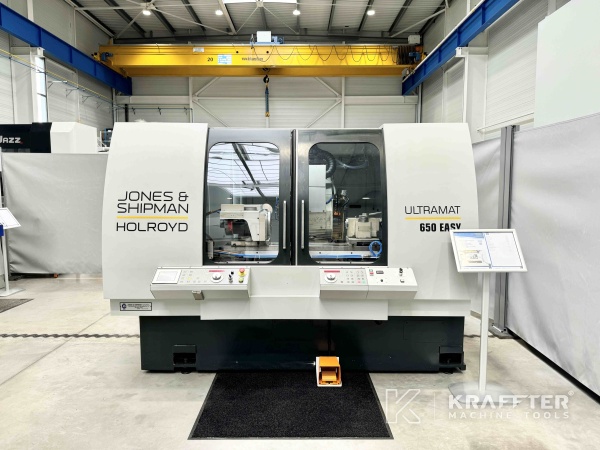
- For example, the JONES & SHIPMAN ULTRAMAT 650 EASY-B is a universal cylindrical grinder with a distance between centres of 650 millimetres and three axes, X and Z as well as an angular B axis. The machined parts can weigh up to 100kg, the grinding wheel size is up to 350mm in the case of universal jig grinding and the spindle power is 7.5 kW.
- The Favorit CNC from STUDER is a universal CNC cylindrical grinder for machining single parts or series production. It has a medium centre distance (650 to 1000 mm) and 3 axes, X, Z and B. It is suitable for a wide range of industrial applications. With its 500 mm external grinding wheel and 9 kW spindle power.
Visual inspection is a crucial step in the evaluation of a used grinder. A careful examination of the general condition of the machine, including its cleanliness and maintenance, provides valuable information on its history and operating condition. It is important to check the geometry, the play of the mechanical elements and the functioning of the lubrication, cooling and filtration systems, in order to detect any premature wear of the components.
The technical documentation for the machine (user manual, electrical, hydraulic and pneumatic diagrams, etc.) is also essential to help the operator get to grips with it and ensure it is properly maintained.
Finally, an on-site test is strongly recommended. Make sure that the machine is functional and, if possible, attend a demonstration to check its operation and precision. This step will help you avoid unpleasant surprises and confirm that the machine is suitable for your needs.
KRAFFTER MACHINE TOOLS: Your specialist in second-hand machine tools
Kraffter specialises in the purchase, reconditioning, refurbishment and retrofitting of second-hand machine tools from the best manufacturers, such as LIPEMEC, KELLENBERGER, GER, TACCHELLA, JONES & SHIPMAN, OKUMA and STUDER, and offers a wide range of high-quality second-hand grinders at competitive prices.