













Our used machine tool brands
Kellenberger: used cylindrical grinders
Since its foundation in 1917, the Kellenberger brand has established itself as a leader in the field of high-precision cylindrical grinding machines. Its history, closely linked to the evolution of the manufacturing industry, is marked by a constant quest for innovation and quality. Now part of the Hardinge Group, Kellenberger continues to build on its heritage of excellence by providing jig grinding solutions for a wide range of industrial applications, from mass production to the manufacturing of complex single parts.

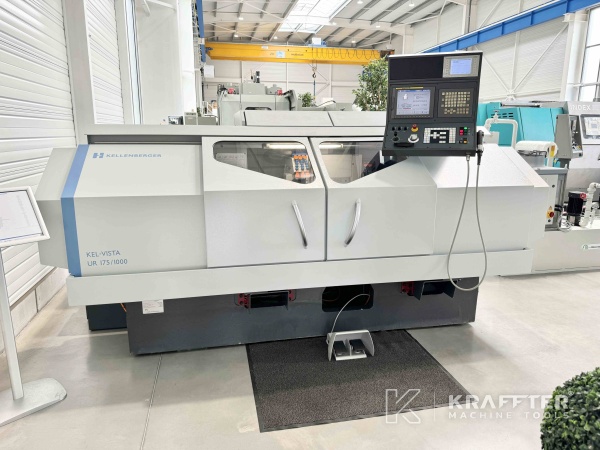
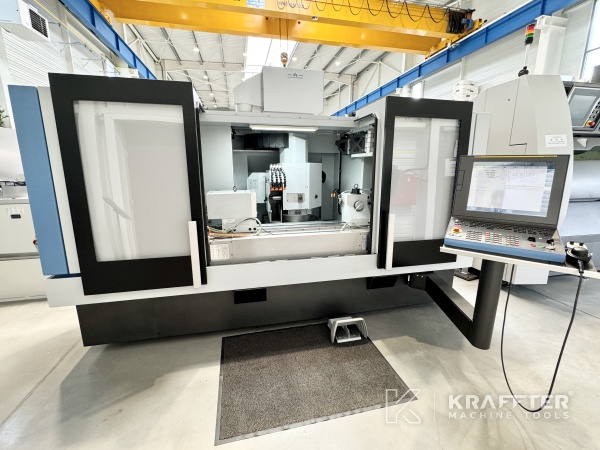
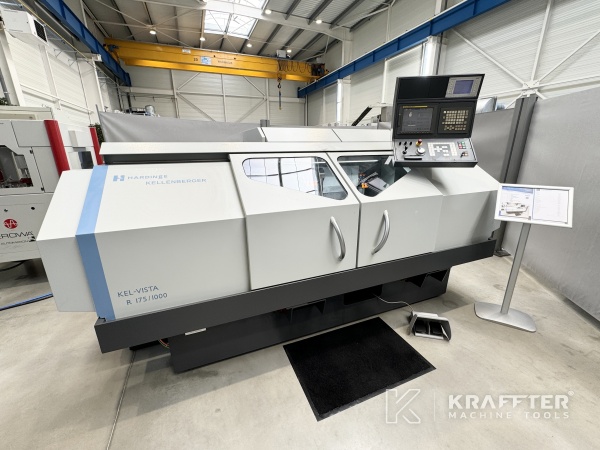
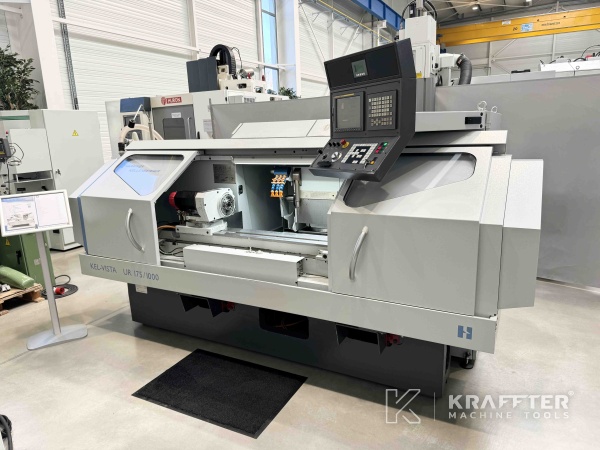
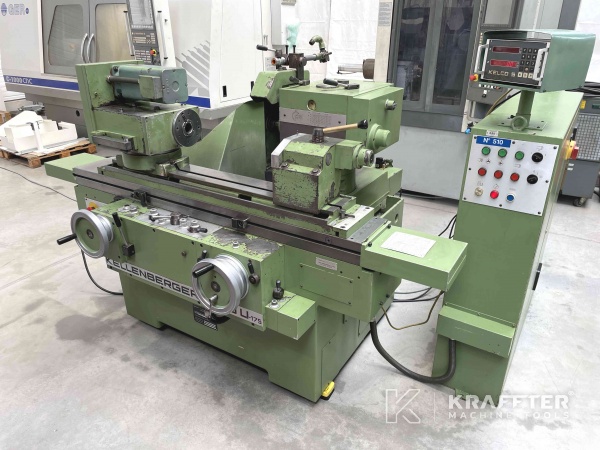
A century of Swiss excellence in precision grinding
From artisanal beginnings to hydraulic innovation (1917-1945)
In the aftermath of the First World War, European industry was in the throes of reconstruction, with increased demand for high-performance machine tools. It was in this buoyant context in 1917 that Leonhard Kellenberger, with the benefit of experience gained abroad, founded his company L. KELLENBERGER & Co AG, with a clear vision: to offer precise and high-performance machining solutions.
In 1918, the company launched the first conventional universal grinding machine, a versatile machine capable of performing internal and external cylindrical grinding, thus meeting a crucial need in industry. This machine laid the foundations for Kellenberger's reputation in the field of cylindrical grinding, a sector also invested in by other key players such as Studer.
Until 1935, the company diversified its production by introducing surface grinders, machines for reconditioning car engines, fine boring machines, honing machines and crankshaft grinders. This diversification demonstrates Kellenberger's desire to adapt to the varied needs of different industrial sectors, particularly the automotive industry, which was growing rapidly at the time, creating a strong demand for specialised machinery.
The year 1935, with the arrival of the first tool sharpener, marked the end of the diversification period for KELLENBERGER. A decision that was ratified some 20 years later by the new director, Edgar Kellenberger, who formalised the company's positioning in the cylindrical jig grinding and tool sharpening segments.
Kellenberger took an important step forward in 1945 with the introduction of the first universal hydraulic grinder, a major technological advance offering more precise control of movements, improving the quality of the finish and enabling the machining of harder materials. This development is comparable to that seen at STUDER or HAUSER, which also adopted hydraulics to improve the performance of their machines.
The rise and specialisation in cylindrical jig grinding (1956-1989)
Under the direction of Edgar Kellenberger from 1956, the company continued to develop and refine its expertise.
In the 1960s, Kellenberger specialised in universal cylindrical grinders and tool sharpening machines, a strategic decision that positioned it in a rapidly expanding market. This specialisation is reminiscent of the strategy adopted by other players in the sector at the same time, such as Mikron AG and Schneeberger, who focused on specific niches to develop recognised expertise.
In 1976, the introduction of cylindrical grinders with stepper motor control (types R/UR/URF) marked a first step towards the automation of jig grinding cycles and numerical control of the machines.
The digital age and internationalisation (1980-1995)
The 1980s and 1990s were a major turning point for Kellenberger, with the arrival of numerical control and international expansion.
Kellenberger joined forces with the Swiss electronics manufacturer Grossenbacher (now AXESTA Heidenhain) to develop a numerical control system. This partnership with a leader in the field of measurement and control systems for machine tools enabled the company to integrate cutting-edge CNC technologies. This collaboration led to the creation of the first prototype of a Kellenberger CNC grinder in 1981, which was presented at EMO Hanover, a major international trade fair for machine tools.
The following years saw the development of the KEL-VARIA range, offering more efficient and flexible CNC solutions. This foreshadowed the new segmentation of the brand's offering, which would be marketed after the acquisition of Kellenberger by the American group Hardinge Inc. in 1995.
This acquisition was a major event that allowed Kellenberger to benefit from the resources and network of an international group bringing together major brands of precision machine tools such as HAUSER and its CNC jig grinders and Jones & Shipman.
Integration into Hardinge and consolidation (1997-2014): towards global leadership
Integration into the Hardinge group opened a new era of growth for Kellenberger, characterised by strategic acquisitions and consolidation of its product range.
From 1997 to 2008, the company introduced the KEL-VISION, KEL-VISTA, KEL-VIVA and KEL-VERA ranges, demonstrating a constant effort to innovate and adapt to market needs.
The merger in 2008 with the HAUSER (HTT) brand marked the beginning of a period of mergers and acquisitions aimed at preserving the status quo with the competing group UNITED GRINDING. The latter had adopted a similar strategy by assimilating numerous premium machine tool brands such as CNC tool grinding machines WALTER and tool grinding machines EWAG.
Thus, until 2014, the successive acquisitions of Jones & Shipman, Usach and Voumard considerably strengthened the Hardinge Grinding Group, of which Kellenberger is the management company. These acquisitions complement the group's offering in the field of jig grinding, covering a wide range of applications and technologies.
Kellenberger today: Swiss excellence at the service of cutting-edge industries
Today, Kellenberger, within the Hardinge Group, is positioned as a supplier of complete precision grinding solutions, addressing demanding sectors such as aerospace, automotive, mechanical engineering, tooling and medical.
Range of machines and applications: a solution for every need
The Kellenberger range of machines is segmented to meet the specific needs of different industrial sectors:
- Universal cylindrical grinders: these versatile machines are designed for external and internal cylindrical grinding of small and medium-sized parts. They are used in various sectors, such as mechanical engineering, tooling, automotive, aerospace and hydraulics.
- Special grinders and system solutions: Kellenberger also offers customised solutions for specific applications, integrating advanced technologies and automation systems. These solutions are particularly suitable for series production and complex parts.
- Internal grinders (Voumard): under the Voumard brand, Kellenberger offers grinders dedicated to the internal grinding of parts.
- Jig grinders (Hauser): Hauser machines, also part of the Hardinge group, specialise in jig grinding, a technique that enables very high precision to be achieved for complex parts.
- Cylindrical grinders (Tschudin): Tschudin offers cylindrical grinders for specific applications.
This segmentation allows Kellenberger to offer a comprehensive range of products tailored to the needs of each customer, offering standard machines for common applications and customised solutions for more specific needs.
Strategy: customer focus at the heart of innovation
Kellenberger has always focused on quality, precision and innovation. Today, customer focus is at the centre of its strategy, with comprehensive and customised solutions, ranging from standard machines to integrated systems. Innovation continues, with the development of new technologies and the integration of Industry 4.0 in its machines. The service offering and partnership with customers are also important focal points.
Focus on the Kellenberger 100: compactness and modularity for performance
Launched to celebrate Kellenberger's centenary, the Kellenberger KEL 100 CNC cylindrical grinder perfectly embodies the company's philosophy: innovation at the service of customer needs. This universal cylindrical jig grinding machine has been designed with the specific constraints and requirements of today's machine shops in mind.
Faced with often limited production space, the Kellenberger 100 offers a compact solution without compromising on performance. Its ingenious design allows for easy integration even in the most confined environments, thus optimising the use of available space.
Aware of the diversity of applications and the specific needs of each customer, Kellenberger engineers have designed the Kellenberger 100 with exceptional modularity. The 10 configuration variants of the wheelhead allow the machine to be precisely adapted to the requirements of each task. This modularity also allows for future development of the machine according to the changing needs of the customer, a long-term investment.
It also offers high-level performance. With an Exter wheelhead spindle drive power of 11 kW and a new design of the Z-axis guide, it guarantees optimal precision and productivity.
Emphasis has also been placed on ergonomics and user-friendliness with the new Fanuc 31i CNC control featuring an intuitive touch screen that simplifies programming and machine operation.
Buying second-hand Kellenberger machines: advantages and terms and conditions
The purchase of a second-hand Kellenberger CNC cylindrical grinder, such as the Kellenberger 100 or the KEL-VISTA, represents an interesting opportunity for companies wishing to combine performance, Swiss precision and cost control. Kellenberger, with a heritage spanning more than a century, is renowned for the robustness and longevity of its machines, making it a relevant choice on the second-hand market.
Advantages of a second-hand Kellenberger:
Buying a second-hand Kellenberger allows substantial savings compared to buying a new machine, thus making cutting-edge technology accessible to a wider range of companies, including SMEs and smaller workshops.
Used machines are generally available more quickly than new machines, which can have long delivery times. This is a crucial advantage for companies with urgent needs.
Kellenberger's reputation for robustness and durability ensures a long service life for the machines, even second-hand ones, provided they have been properly maintained and serviced.
Focus on the second-hand KEL-VISTA: excellent value for money
The Kellenberger CNC cylindrical grinder KEL-VISTA, in particular, stands out as an interesting option on the second-hand market. Designed as an economical alternative to hydraulic grinders, it offers excellent value for money. Its advantages, even second-hand, remain relevant:
- Compact design: suitable for workshops with limited space.
- User-friendly interface: ease of use and programming.
- Versatility: capable of performing various jig grinding operations (outer and inner cylindrical, surface, tool, form).
- Precision: thanks to its thermally optimised bearing system
Important points to consider when buying a used Kellenberger:
Firstly, it is crucial to ensure that the machine has been serviced and reconditioned according to the manufacturer's standards by a specialised retailer of used machine tools. This guarantees the maintenance of the machine's performance and reliability. A good indication of the level of care taken in the refurbishment of machine tools is the size of the stock of used machine tools that the retailer offers.
It is also important to find out about the history of the machine (maintenance, repairs, previous use) to assess its general condition.
Make sure that spare parts and technical support for Kellenberger machines are available, ideally from a specialist or directly from the manufacturer.