
















Used machining cent: technology, comparisons and investment opportunities
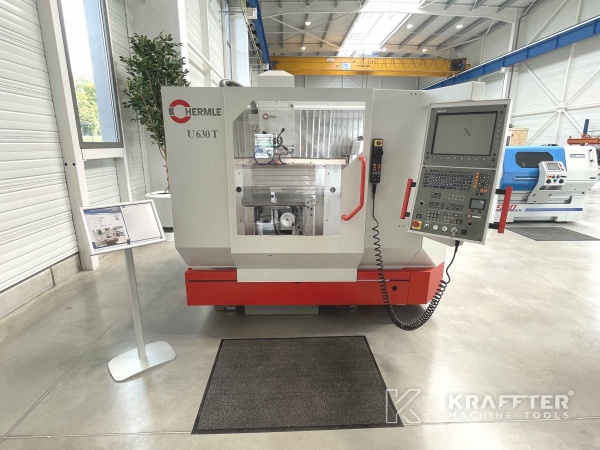
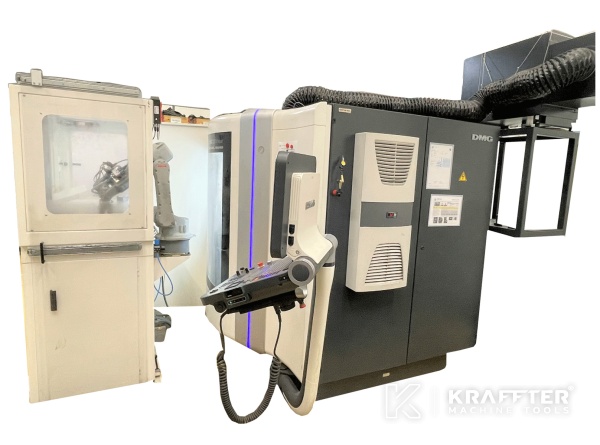
The used machining centres offered by Kraffter Machine Tools are sophisticated machine tools, controlled by computer numerical control (CNC). Unlike conventional milling machines or our used CNC milling machines, they are capable of performing multiple machining operations on the same part with a minimum of human intervention. They combine the functions of drills, milling machines, boring machines, etc. in a single unit, which greatly simplifies manufacturing processes. Born of the need to improve productivity and quality since the Industrial Revolution, these centres have revolutionised manufacturing industry by bringing together several machining stages in a single place. Today, they play an essential role in many sectors by enabling the manufacture of complex parts with precision and speed, while improving production flexibility.
FAQ :
Machining centre: operating principles and technologies used
A machining centre operates around a few key elements: a rotating spindle (carrying the cutting tool), axes of movement (allowing relative movement between the tool and the part), a table to fix the part, and a tool magazine to automatically change tools during operation. Thanks to computer numerical control, it is possible to programme very precise machining sequences (tool paths, feed speeds, etc.), guaranteeing that the final shape corresponds exactly to the desired specifications.
During machining, the tool removes material by cutting (milling, drilling, boring, etc.) on different surfaces of the part without the need for frequent manual repositioning – the machine can automatically reposition the part via its controlled axes. For example, a machining centre can drill and then mill a part in a single cycle, which considerably reduces production time. Most centres are equipped with an automatic tool changer (ATC) that selects and exchanges tools from the store in a few seconds, making machining almost fully automated.
The integrated modern technologies include sensors and thermal correctors to compensate for expansion (e.g. intelligent thermal control modules on some 5-axis machines), direct-drive actuators (torque motors on the rotary axes for greater speed and precision), and optical linear scales to ensure ultra-precise positioning. For example, some high-end models directly measure the position of the rotary and linear axes to achieve an accuracy of a few microns. Finally, the latest machining centres are integrated into Industry 4.0 environments, with remote monitoring, predictive maintenance and interconnection to CAD/CAM software, further improving their efficiency and reliability.
Types of machining centres: 3-axis, 4-axis or 5-axis machining centre?
Machining centres are mainly categorised according to the number of axes: 3 axes, 4 axes and 5 axes (or even more, up to 7 axes on certain specialised machines). The number of axes determines the freedom of movement and the complexity of the forms that can be achieved: in general, more axes offer more geometric possibilities and better precision.
3-axis machining centres have linear axes X, Y and Z. The piece remains fixed in orientation, only the position of the tool changes according to these three axes. This type is well suited for operations on flat surfaces or for drilling in the vertical axis (Z axis). It can produce 2D or 2.5D profiles and some simple 3D shapes, but it is limited for complex parts. Its simpler operation makes it economical and fast for less complex parts.
A 4-axis machining centre adds a rotation axis (usually the A axis, rotation around X). The part can be rotated, which allows the side faces to be machined without detaching it from the assembly. For example, holes can be drilled around the circumference or cylindrical/tubular shapes can be machined. In practice, the fourth axis offers more flexibility but does not yet allow continuous machining in all directions, and the rate can be somewhat reduced compared to a 3-axis machine due to the additional repositioning.
The 5-axis machining centre adds a second axis of rotation (B axis, rotation around Y, on a tilting rotary table machine, for example). The combination of 5 axes (X, Y, Z linear + A, B rotary) makes it possible to orient the part at almost any angle. This means that very complex shapes can be machined in a single operation, with a high level of precision on all sides. Simultaneous 5-axis machining allows for sophisticated free-form shapes (turbines, propellers, biomedical implants, etc.) that are impossible to produce with 3-axis machining. These machines drastically reduce the number of set-ups required (all sides can be machined in a single set-up), which reduces cumulative errors and improves final quality. The downside is a high purchase cost and more complex programming, which is reserved for highly qualified personnel.
Qual è la differenza tra un centro di lavoro a 5 assi simultanei e a 5 assi posizionati (3+2)?
La distinzione tra lavorazione simultanea a 5 assi e lavorazione a 5 assi posizionati (3+2) è fondamentale nella scelta di un centro di lavoro CNC.
Lavorazione a 5 assi posizionati (3+2)
Gli assi rotativi vengono utilizzati per orientare il pezzo o l'utensile nella posizione desiderata.
Una volta raggiunto l'orientamento, la lavorazione viene generalmente eseguita utilizzando i tre assi lineari.
Questa soluzione permette di lavorare superfici inclinate e diverse facce del pezzo riducendo i piazzamenti.
Lavorazione simultanea a 5 assi
Durante il ciclo di fresatura, gli assi lineari e rotativi possono muoversi contemporaneamente e in modo coordinato.
Questa tecnologia consente di seguire traiettorie complesse e di modificare continuamente l'orientamento dell'utensile rispetto alla superficie lavorata.
È particolarmente utile per componenti con superfici tridimensionali complesse, come pale di turbine, giranti, stampi e parti aeronautiche.
La disponibilità della lavorazione simultanea dipende dalle capacità del CNC, dalla cinematica della macchina e dalle opzioni installate.
Un centro di lavoro a 5 assi non dispone necessariamente di tutte le funzionalità richieste per la lavorazione simultanea. È quindi importante verificare la configurazione effettiva prima dell'acquisto.
Types of machining centres: vertical machining centre, horizontal machining centre or universal machining centre
Machining centres can also be distinguished according to the orientation of the spindle as a vertical machining centre and a horizontal machining centre. The difference lies in the position of the spindle in relation to the floor (perpendicular and therefore vertical or parallel to the floor, therefore horizontal) and implies preferred uses:
Vertical machining centre (VMC): the chuck is oriented downwards, the part is fixed on a horizontal table. This is the most common configuration for small and medium-sized parts. It offers good visibility and accessibility for the operator, easy loading/unloading of parts and a smaller footprint than a horizontal machine. Vertical machines are suitable for machining flat surfaces, cavities or 3D contours on the upper part of the parts. In 5-axis vertical machining centres, it is possible to integrate a tilting/rotating table to access all sides of the part. However, chip removal is less efficient (the chips fall on the part), which may require abundant spraying and blowing to eliminate them. Vertical machining centres are very common in general mechanical workshops and in the production of prototypes.
Horizontal machining centre (HMC): the spindle is oriented horizontally (forward), the workpiece is generally fixed on a vertical rotary table (tombstone or pallet). This configuration is ideal for heavy or large workpieces, as well as for mass production. The horizontal position considerably facilitates the free fall of the shavings under the effect of gravity, preventing them from accumulating in the cavities and improving cutting efficiency in long operations. In addition, HMCs are often equipped with multiple pallet changers, which make it possible to load a part while another is being machined, thus maximising the utilisation rate. On the other hand, these machines are expensive and bulky and their programming/assembly can be more complex. They are highly valued for intensive machining and mass production (for example: engine blocks, structural parts) where their increased productivity offsets the additional costs.
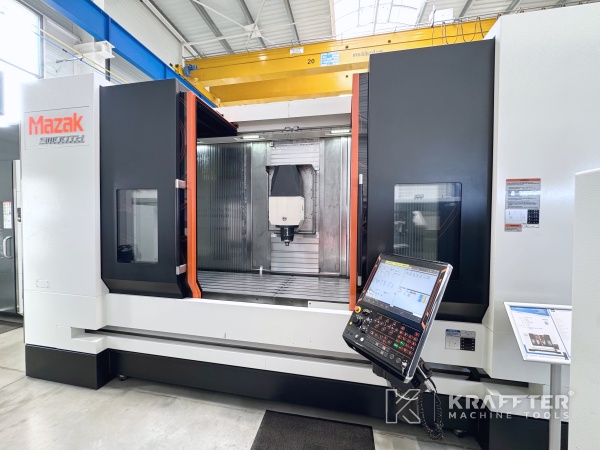
‘Universal’ machining centres: this term often refers to 5-axis machines capable of machining a part from almost any angle in a single setup. These are often 5-axis centres with an integrated tilting table (or swivel head) that combine certain advantages of vertical and horizontal machining. For example, a universal 5-axis machining centre can carry out the complete machining of a complex part without manual repositioning, and machine both the upper and lateral parts of a part in a single operation. Most of the machining centres offered by Kraffter Machine Tools fall into this ‘universal’ 5-axis category.
An indispensable asset: for which industrial applications should the use of a machining centre be favoured?
Machining centres are used in a very wide range of industrial sectors, wherever parts need to be machined with precision and efficiency. Here are a few major fields and examples of applications:
In the aeronautics and aerospace industry, machining centres are used in the manufacture of aircraft structural parts, engine and turbine components, composite moulds, etc. For example, 5-axis machines are essential for machining turbine blades or blisks (monobloc rotors) with complex aerodynamic shapes. Fuselage parts and critical components (housings, landing gear parts, etc.) are also produced to strict tolerances.
In the automotive industry, machining centres are used in the mass production of engine and transmission parts and tools. Four-axis or horizontal machining centres, for example, machine engine blocks, cylinder heads and gearbox housings with speed and repeatability. They are also used to make body moulds, mechanical part prototypes and braking system components. The high output and automation offered by these centres are crucial for this sector.
For the manufacture of medical and health devices, machining centres can be used, for example, to produce orthopaedic implants (hip and knee prostheses), precision surgical instruments or custom-made dental prostheses. High-precision 5-axis machining centres (often equipped with advanced controls such as Heidenhain) guarantee the fine tolerances and surface quality required in the medical sector. For example, a 5-axis machine can sculpt a titanium hip prosthesis with a near-perfect fit.
In the energy industries (oil, gas, turbines), machining centres are used to machine large parts made of hard alloys, such as valve bodies, hydroelectric turbine rotors and impellers for pumps. High-capacity machining centres, often horizontal 5-axis, allow these heavy parts to be handled and complex geometries (helical channels, etc.) to be machined in difficult materials.
In the manufacture of moulds and tools (tooling/manufacturing), and particularly in the mould sector (plastic injection, stamping), many high-speed 3- and 5-axis centres are used to machine mould cavities with sophisticated 3D shapes (curved walls, deep cavities). Shape precision and surface finish are critical, and machines such as Mikron or DMG, known for their high precision, are highly prized. Similarly, in aeronautics, the manufacture of production or assembly tools calls for machining centres.
In the electronics and consumer goods sectors, machining centres are used for prototypes or small series with high added value. For example, aluminium smartphone frames, moulds for laptop cases, or precision mechanical parts for optics (camera housings, etc.) are machined. Although the bulk of electronics production is done by other processes, notably those achievable via one of our second-hand milling machines, machining centres are used in the design of prototypes and the production of tooling parts or specific small series with high precision.
In short, the versatility of machining centres makes them indispensable in modern manufacturing. Because they accept a variety of materials (metals, light alloys, technical plastics, etc.) and offer levels of precision adapted to each need, they are found in almost all mechanical production industries.
Advantages and points to consider with CNC machining centers
main Advantages of a machining centre
CNC machining centres offer high precision and repeatability in the production of parts. The dimensional quality obtained is stable from one part to another, which is crucial for demanding sectors. They also make it possible to increase productivity: by combining several operations in a single assembly, preparation time, machine adjustments and intermediate checks are reduced, which is particularly beneficial for the production of various parts in small series. In addition, a machining centre can produce complex shapes that are impossible to machine using conventional methods or with simpler machines. For example, simultaneous 5-axis machining can machine parts with undercuts, helical surfaces or complex angles in a single step. The automation they offer (automatic tool change, programmable cycles, possible pallet change) reduces the labour required and the risk of human error. Finally, the software flexibility (modification of the NC programme) allows production to be quickly adapted to new parts or design changes without changing the physical tooling.
POINTS TO CONSIDER
The acquisition of a machining center is a major investment that must be considered in terms of sustainable industrial performance. This high-tech equipment, particularly multi-axis configurations, requires a precise analysis of needs to ensure that it is suited to production objectives.
Its efficiency also depends on the technical expertise of the teams. Programming, adjustments, fine-tuning, and maintenance require specific skills and appropriate training, which are essential to fully exploit the machine's potential.
Furthermore, like any precision equipment incorporating mechanical, electronic, and automated systems, a machining center requires regular technical monitoring. The quality of maintenance and the responsiveness of after-sales service play a key role in machine availability and production continuity.
Finally, for simple operations or very small production runs, the use of a machining center may not be immediately optimal. Rigorous upstream production organization (off-machine programming, tool management, production run planning) is essential to take full advantage of its capabilities.
Buying a used machining center: a strategic response to cost control
The acquisition of a machining center represents a major decision for a workshop, particularly when it comes to sophisticated 5-axis machines. However, buying a second-hand model is a strategic alternative, offering an excellent compromise between performance and acquisition cost. For companies looking to modernise their machine pool without tying up too much capital, a reconditioned machine tool provides access to high-end equipment with an optimised return on investment. It is still necessary to choose a reliable machine that has been properly serviced and is suited to your needs.
Why choose a second-hand machining centre?
Opting for a carefully selected used machine provides access to high-performance equipment while significantly reducing the initial investment. A used 5-axis machining center, fully refurbished, is generally offered at a significantly lower price than a new machine, depending on its configuration, equipment, and the reconditioning work carried out.
This positioning makes it a particularly relevant solution for workshops wishing to:
- Reduce depreciation: A second-hand machine limits the impact on cash flow while retaining an attractive residual value.
- Maximise flexibility: For variable series, prototyping or specific productions, a second-hand machining centre allows you to diversify your machine park at a lower cost.
- Access to high-end models: With the same budget, it is possible to purchase a second-hand premium machine rather than a basic new model.
A second-hand machine does not mean compromising on quality, provided that it has undergone rigorous reconditioning and meticulous inspection before being put back into service.
How can you guarantee a safe and profitable purchase?
The purchase of a type of used milling machine, such as a used machining centre, must meet strict criteria to ensure its long-term profitability and reliability. Properly reconditioned equipment goes through several essential stages:
- In-depth inspection: Analysis of the mechanical, geometric and electronic state. Checking of clearances on ball screws, linear guides and critical components.
- Replacement of worn parts: Spindles, drives, electronic components, hydraulic pumps, etc. Any element showing signs of wear is replaced with original or equivalent parts.
- Calibration and geometric control: Axes are precisely aligned to ensure compliance with the manufacturer's tolerances. A certified metrology report is provided.
- Numerical control: Numerical control is checked to ensure its reliability, stability, and suitability for production requirements. CNC upgrades or retrofits may only be considered when there is a genuine technical benefit.
- Power-up testing and demonstration: The machining center is presented under power and can be observed in operation during a demonstration, allowing its behavior, accuracy, and overall condition to be validated before going into production.
By choosing a supplier specialising in the reconditioning and sale of second-hand machine tools, you secure your investment and benefit from a machine that is ready to produce immediately, with a responsive after-sales service if needed.
Refurbishment and retrofitting: the alternative to buying new
Beyond purchasing, it is possible to optimise your existing machine pool by calling on a specialist in refurbishing or retrofitting machine tools. This approach extends the lifespan of a machining centre by integrating technological improvements while retaining its robust mechanical structure.
Rather than investing immediately in a new machine, choosing a well-selected second-hand machining centre or a customised reconditioning can be an effective solution for increasing competitiveness without burdening the budget. The gains are real, in terms of both productivity and profitability, provided that the machine is overhauled under optimal conditions and accompanied by serious technical monitoring.
The main brands of machining centres resold by Kraffter Machine Tools© - Chiron, Fagima, Mikron, DMG Mori, Axile ...
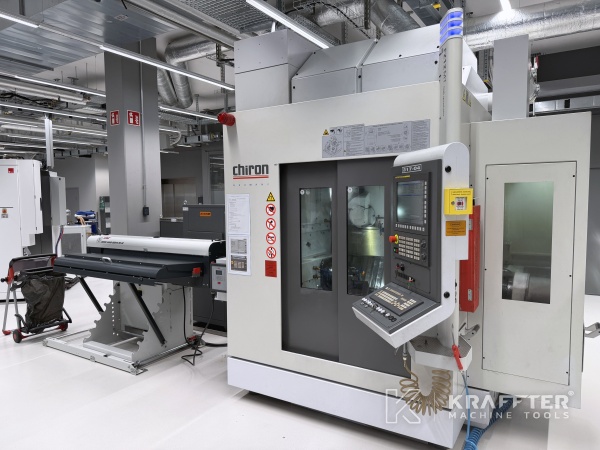
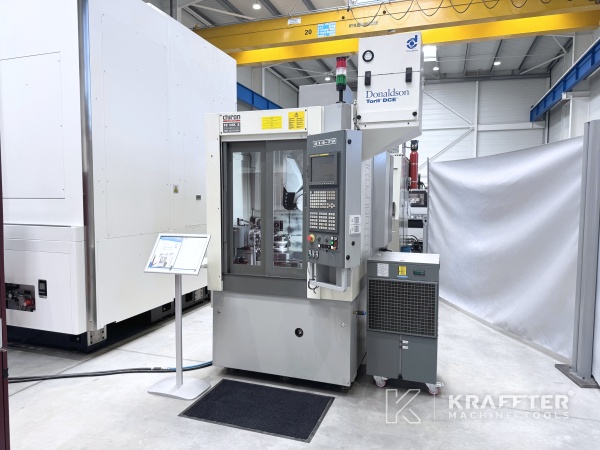
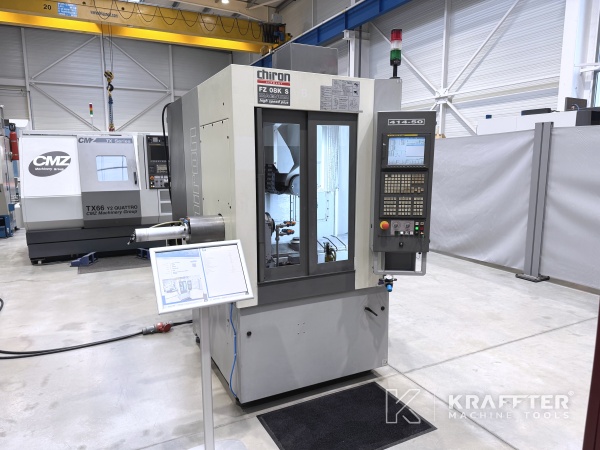
CHIRON is renowned for developing high-speed machining centres designed for industrial environments geared towards productivity and repeatability. Its machines are characterised by high speeds, consistent precision and a design suited to mass production. They are generally integrated into structured, automated production systems, with a technical positioning geared towards high industrial performance and optimised production organisation.
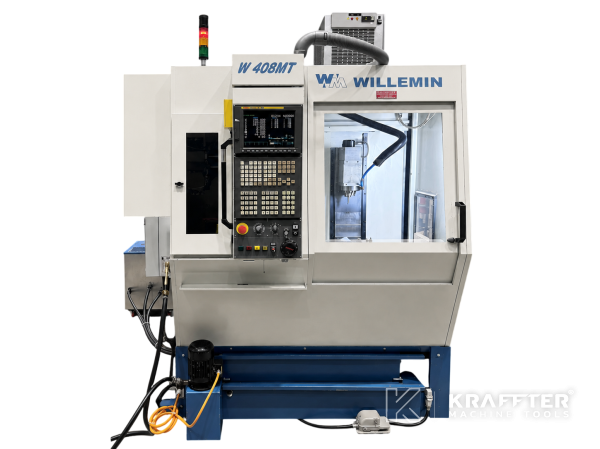
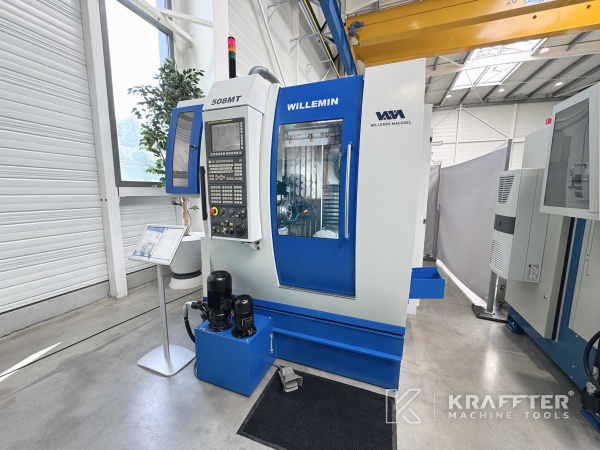
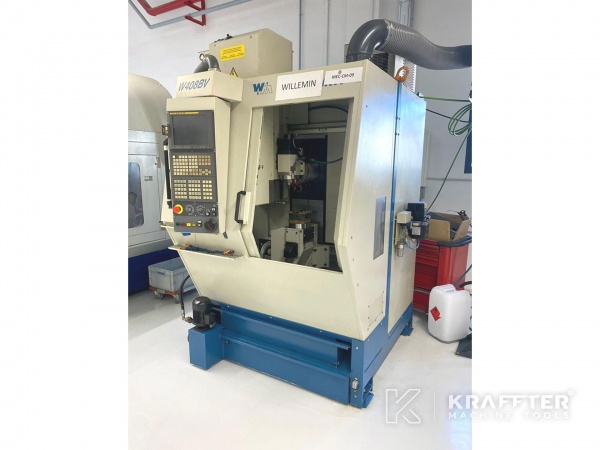
WILLEMIN MACODEL designs multifunction machining centres for very high precision applications. The machines are developed for machining complex parts, often of small dimensions, with a high level of technological integration. They offer advanced capabilities in terms of precision, versatility and control of multiple operations, and are mainly used in sectors requiring very fine dimensional control.
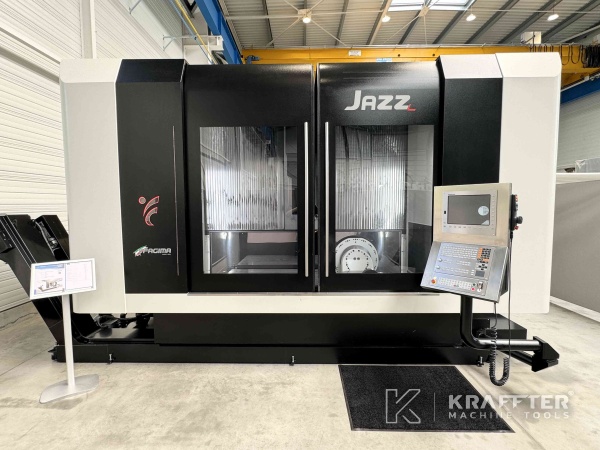
Fagima is an Italian manufacturer of 5-axis machining centres, including the Jazz L 5AX model, capable of machining large workpieces in 5-axis continuous mode. Its innovative construction in polymer concrete (DMP technology) gives it good stability and low vibration, which is a plus for precision and durability. The brand is best known in certain European markets and among users looking for a combination of machining capacity, mechanical stability and controlled cost positioning.
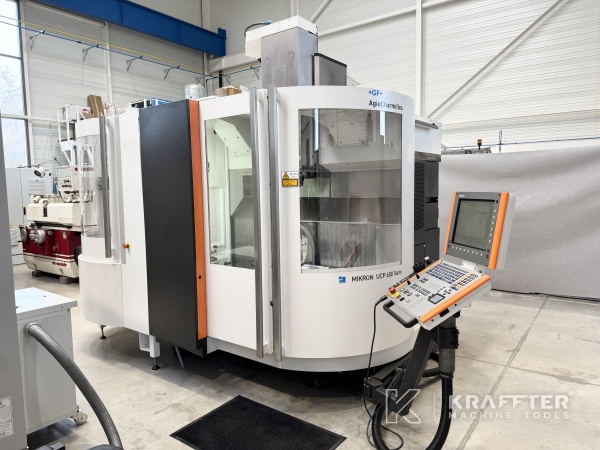
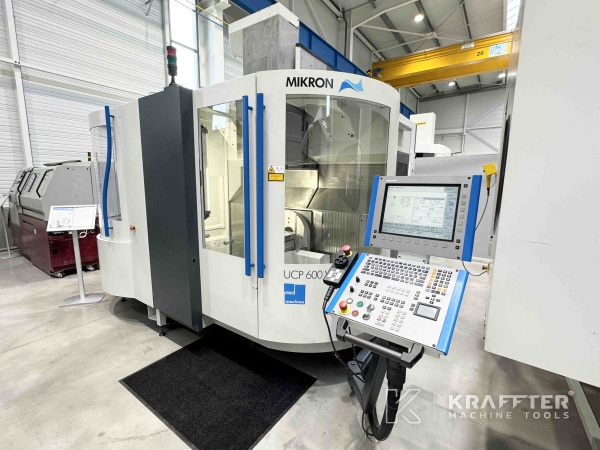
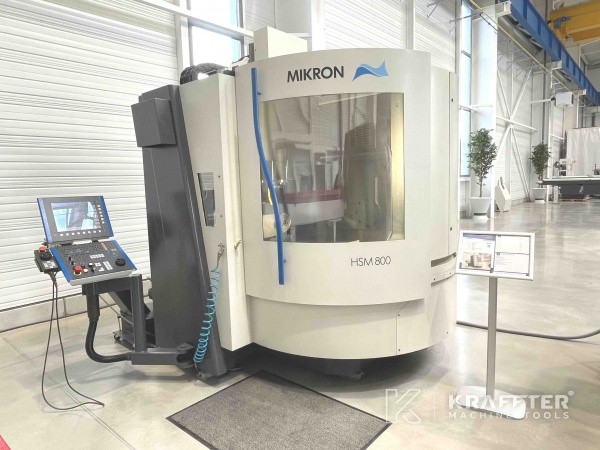
Mikron (GF Machining Solutions) enjoys an excellent reputation in the field of high-precision machining. The UCP 600 Vario, although an older generation, is still regarded as a benchmark for the manufacture of high-precision parts and for the reliability of its results. Users praise its thermal stability, the quality of the Heidenhain control system and its Swiss mechanical robustness. It is used in a variety of contexts, from one-off production to more structured environments, and the brand has a strong international presence, recognised for its extensive catalogue and advanced technological solutions. In short, Mikron inspires confidence in tight tolerances and quality high-speed machining, at the price of a significant investment.
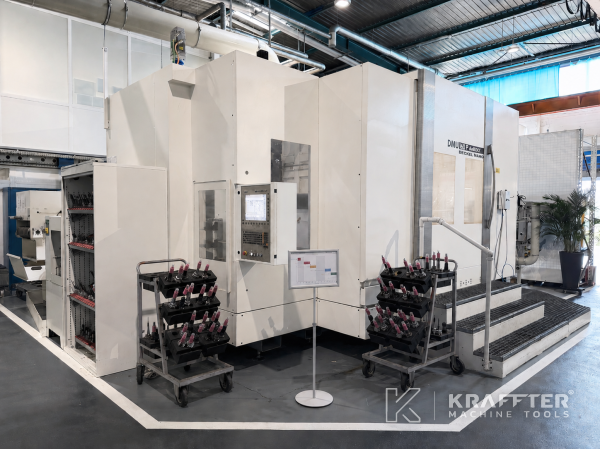
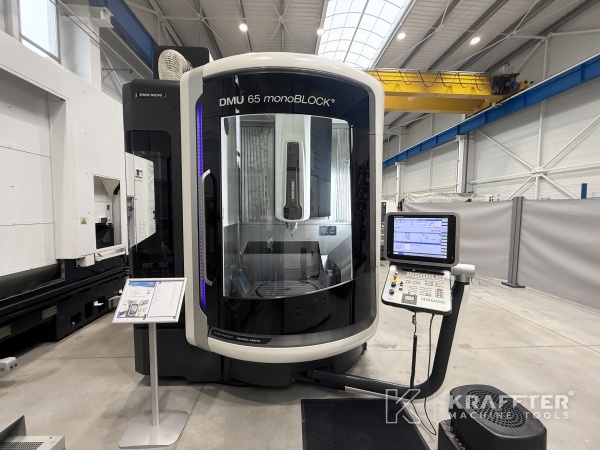
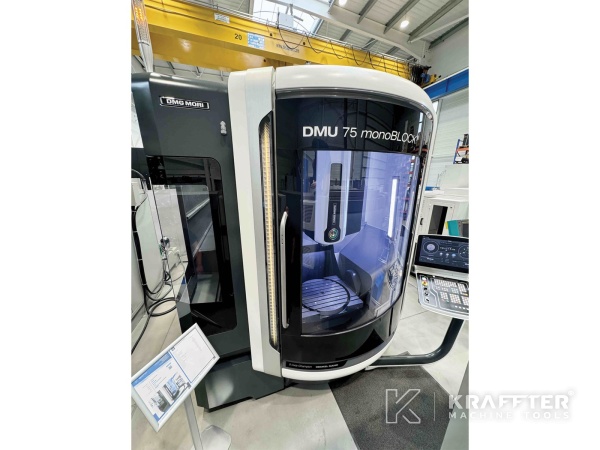
DMG Mori is a world leader, offering a wide range of machining centres covering numerous industrial applications. The DMU 75 monoBLOCK enjoys a reputation as a highly successful multi-purpose machine with precision and automation. It is used in a variety of contexts, from one-off production to more structured environments. The brand is well established internationally and recognised for its extensive catalogue and advanced technological solutions. Many users remain loyal to DMG Mori for the machining quality it delivers and its versatility. The machine is often compared to Hermle or Mazak in its category, and DMG Mori remains a benchmark.
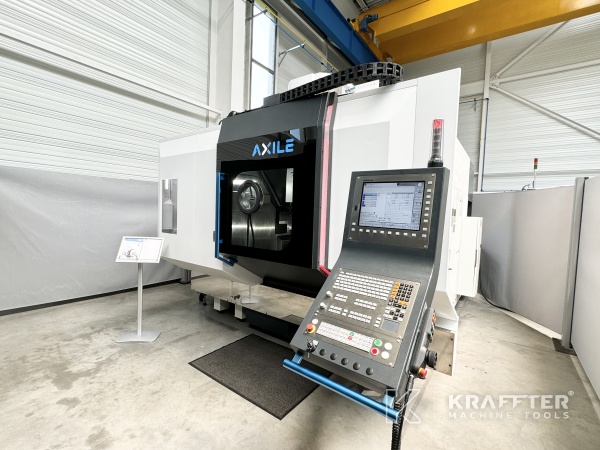
Axile is a newcomer (launched around 2017-2018) and its reputation is still being built. Early feedback highlights that Axile machines are delivering on their performance promises: the G6 impresses with its speed and finish, with users reporting high removal rates while maintaining good surface accuracies. Axile also won points for its smart factory demonstrations (integrated diagnostics, predictive maintenance), with models such as the G6 featuring high speeds, good finishing capabilities and Industry 4.0 features such as diagnostics and predictive maintenance. The brand is gradually expanding its presence in European and international markets.
GROB enjoys a very solid image in industry, particularly in the automotive, aerospace and mass-production sectors. GROB machining centres, particularly the 5-axis machines with horizontal architecture, are renowned for their innovative kinematics, rigidity and excellent chip evacuation. They are designed to operate in highly automated environments, with high output rates and constant repeatability. On the other hand, these machines require advanced industrial integration and a well-structured production organisation to exploit their full potential. GROB is therefore particularly appreciated by manufacturers looking for a global solution focused on productivity, automation and process stability, rather than by multi-purpose or small-production workshops.
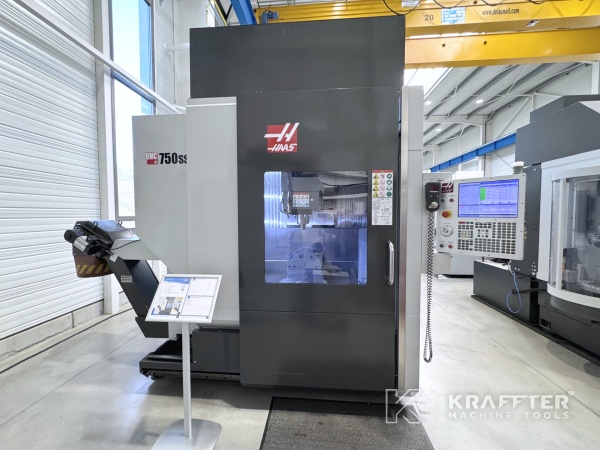
HAAS has established itself as a key player thanks to machining centres renowned for their ease of use, reliability and accessibility. HAAS machines are often seen as pragmatic solutions, offering good performance for a wide range of applications, from prototyping to small and medium production runs. Their intuitive operation and standardisation make them easy to learn and maintain. HAAS machines are used in many workshops for their pragmatic approach and their compatibility with existing machinery.
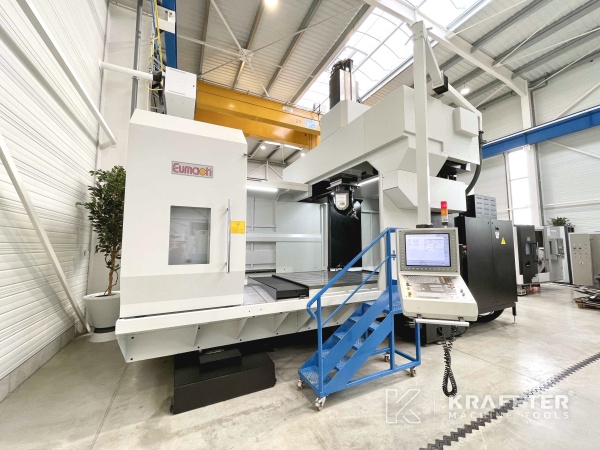
EUMACH is a Taiwanese brand renowned for the robustness of its machines and their good compromise between performance and cost control. Its 5-axis machining centres are appreciated for their rigidity, serious construction and ability to meet demanding industrial applications without excessive complexity. User feedback highlights good mechanical stability and satisfactory production reliability. EUMACH is often positioned as a credible alternative to the major European or Japanese brands, particularly for workshops wishing to move into 5-axis machining without oversizing their investment. However, the brand's profile remains lower in Europe, even though its reputation among professionals is growing steadily.
Can I resell my second-hand machining centre?
Kraffter Machine Tools buys your machine tools that are second-hand, particularly your machining centres, and offers to take care of the entire process. We take care of the entire sale of your professional equipment, from the precise evaluation of your equipment by our experts directly in your workshop, to the complete management of the logistical and administrative aspects related to import-export. Our team also takes care of cleaning, repairing and reconditioning your machining centre to give it a second life on the market, while contributing to a responsible approach to reducing industrial waste and the carbon footprint. Thanks to our recognised experience, we guarantee you a fair evaluation, prompt payment, and a transparent and efficient transaction, enabling you to get the best return on your investment. Whether you are in France or abroad, Kraffter Machine Tools is at your service for a comprehensive and personalised management of your professional equipment.