













Our used machine tool brands
STUDER: a Swiss synonym for excellence in precision cylindrical jig grinding
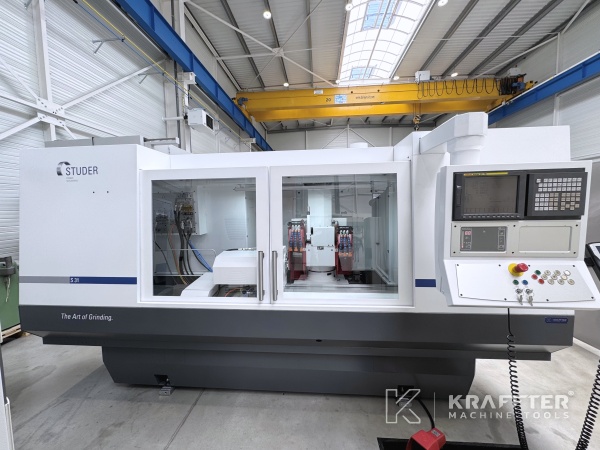
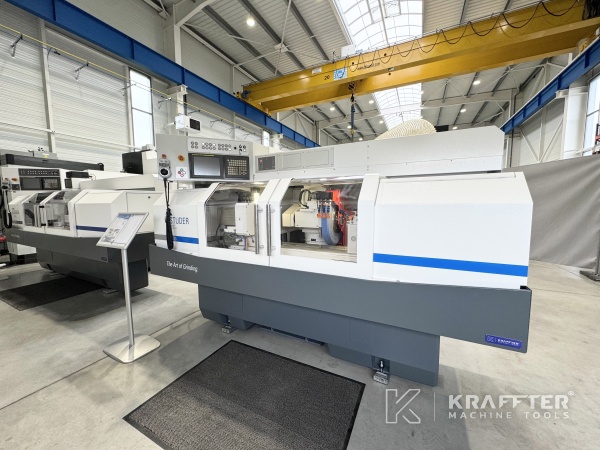
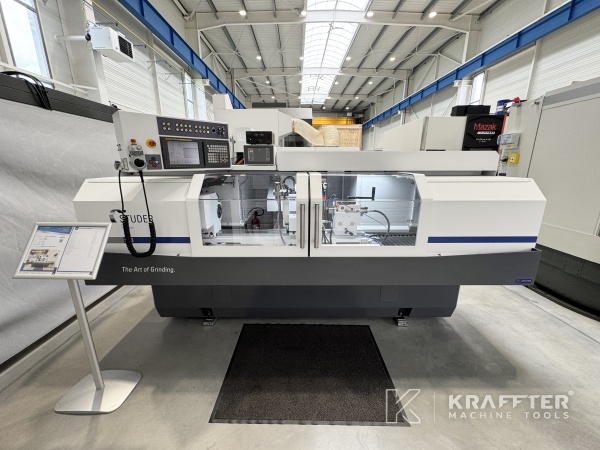
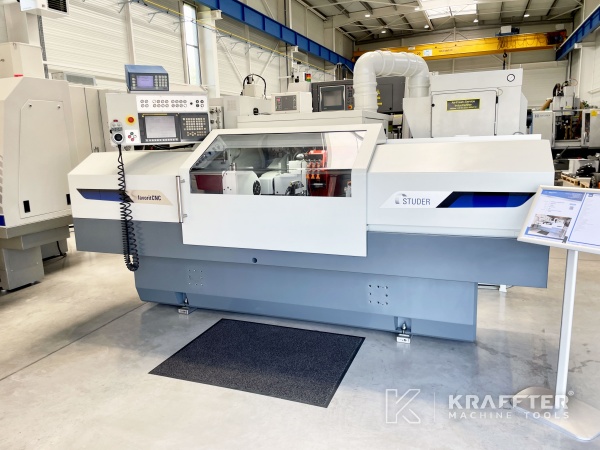
Fritz Studer AG is a Swiss company specialising in high-precision cylindrical jig grinders (internal and external) for machining small and medium-sized parts. The company also produces special jig grinders such as high-speed and high-performance grinders, as well as machines specially developed for manufacturing processes such as external and internal thread grinders or grinders for cam and curve profiles.



The birth of a world leader in jig grinding
The story of STUDER begins in 1912, when Fritz Studer, a Swiss engineer, founded a machine shop in Steffisburg. Faced with a lack of high-performance jig grinders, he designed his own machine, demonstrating a keen sense of machine tool engineering. He thus laid the foundations of Fritz Studer AG, a company that would become a world reference in precision cylindrical jig grinding. From the outset, the company distinguished itself through its ability to develop original technical solutions, with the patent for a silent inversion table.
A crucial milestone was reached in 1936 with the design of the world's first hydraulically controlled cylindrical jig grinder. This major breakthrough was followed in 1965 by the introduction of hydrodynamic spindle bearings, which were incorporated into all the company's machines, considerably improving their precision.
The development, in 1977, of the first CNC machine in the world, marked a historic turning point that placed STUDER at the forefront of jig grinding automation, and ushered in a new era of innovation.
This would see the emergence of the patent for the Granitan® S103 mineral cast iron frame, an innovation that has since formed the basis of all its cylindrical jig grinders, offering superior thermal stability and vibration absorption compared to traditional grey cast iron. This composite material minimises deformations caused by temperature variations and mechanical stress.
The company is also adapting to new machining requirements, with the development of ultra-high-speed (UHS) machining of ceramics.
The dawn of modernity
For STUDER, the start of the modern era came with its integration into the Körber Schleifring group in 1994 (now UNITED GRINDING), a world leader in grinding technologies, where it joined the manufacturers Schaudt and Mikrosa to form the cylindrical jig grinding technology centre. They collaborate in particular with the tool machining technology centre of their counterparts, the jig grinder EWAG and CNC sharpening machine WALTER brands.
Within the group, the company continues its innovation trajectory with, for example, the launch of the S41 CNC universal cylindrical grinder in 2011, integrating advanced technologies such as direct linear drives. More recently, in 2014, STUDER developed the integrated dressing technology WireDress® for metal-bonded grinding wheels, and launched the internal cylindrical grinding machine S141 for machining short and extra-long parts.
At the same time, the company continues to expand its range with machines such as the Favorit and the eco650, and continues its technological development with initiatives such as C.O.R.E. (Customer Oriented REvolution) launched by the UNITED GRINDING Group in 2021, and the development of new jig grinders such as the S36 and S100 in 2022.
With constant innovations, more than 25,000 machines sold, and a position as a major player maintained for more than 100 years in the field of precision jig grinding, STUDER demonstrates an ongoing commitment to excellence and honours its role as a pioneer with Swiss origins, synonymous with quality, precision and reliability.
Flagship products: cylindrical jig grinders for high-precision applications
STUDER specialises in the design and manufacture of high-precision cylindrical jig grinders, covering a wide spectrum of industrial applications. These products are used in the automotive, electronics, hydraulics, aeronautics and aerospace, precision and tooling industries, as well as in mechanical engineering.
Their machines are characterised by rigorous design, the integration of cutting-edge technologies and a high degree of modularity. Here is an overview of the ranges and some of the flagship models:
Universal cylindrical jig grinders:
These versatile machines enable external, internal and face jig grinding, offering great flexibility for the production of single parts or small series.
The S41 CNC universal cylindrical jig grinder, launched in 2011, embodies STUDER's excellence in universal grinding. It stands out thanks to its Granitan® S103 mineral cast machine bed, high-precision hydrostatic or hydrodynamic guideways for the axes, and direct linear drives for the X and Z axes, enabling high acceleration and travel speeds with micrometre positioning accuracy. And a user-friendly user interface based on a Fanuc 31i-A numerical control with StuderGrind and StuderWin software, offering advanced programming and control functionalities.
Do you want to resell your S41?
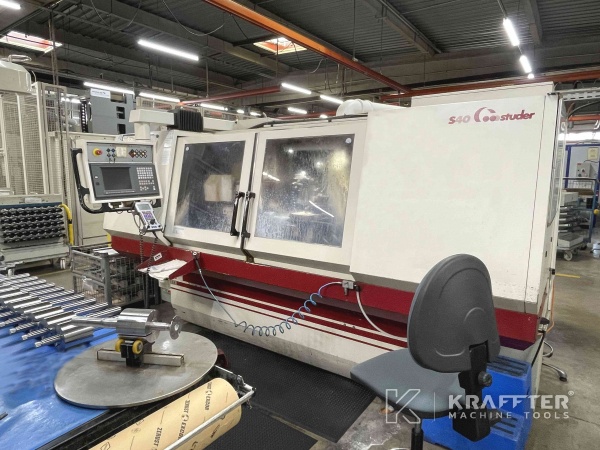
The big sister of the S41, the STUDER S40 CNC universal cylindrical jig grinder from 1998, offers a high degree of flexibility thanks to its modular architecture. It can be configured for various external and internal cylindrical jig grinding applications. With a robust design and particularly cutting-edge for its time, it is still in high demand today.
Production cylindrical jig grinders:
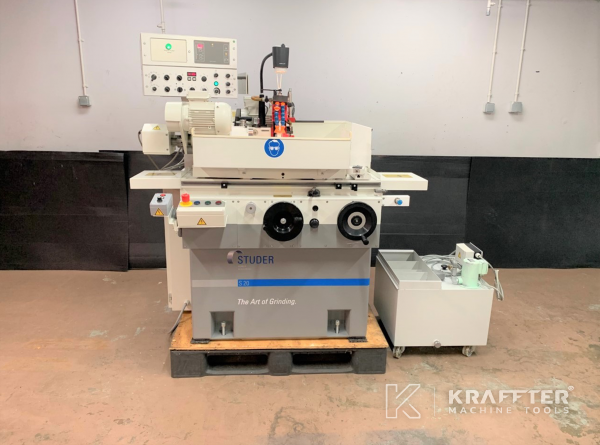
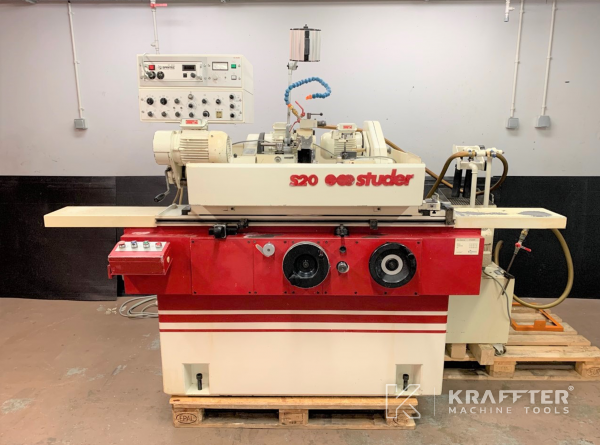
Designed for mass production, these machines optimise grinding cycles for maximum productivity. The S20-2 is designed for the highly automated mass production of jig grinding parts. It is often used in the automotive industry for grinding components such as camshafts and crankshafts. Its modular design allows it to be adapted to the specific needs of the customer.
Internal cylindrical jig grinders:
They are dedicated to the jig grinding of internal surfaces, with specific solutions for short and extra-long parts, such as the S141 internal cylindrical jig grinder.
Machines that make Swiss excellence in precision machining accessible:
The Favorit CNC, described by its manufacturer as ‘the grinding machine for small budgets and high standards’, is an economical solution for workshops that want to access STUDER CNC jig grinding technology. It offers good value for money without compromising on precision and reliability. It is suitable for grinding medium-sized workpieces, both single units and series.
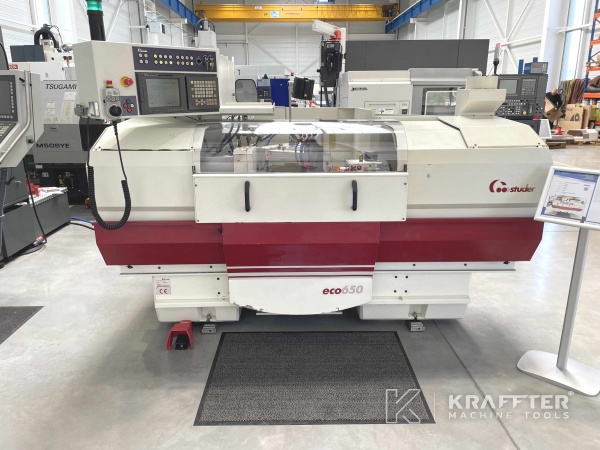
The eco650 is designed for universal cylindrical jig grinding, focusing on the essentials: precise and efficient grinding. It is ideal for standard applications in small and medium-sized companies.
Buying used STUDER machines: advantages and terms and conditions
The acquisition of second-hand STUDER machines offers several advantages for companies seeking to optimise their investment costs while benefiting from STUDER quality and precision.
Used machine tools sold by companies with the necessary logistics for the efficient handling of equipment are also available more quickly than new machines, which can have excessively long delivery times. This can be a major advantage for companies with urgent needs.
STUDER machines are renowned for their robustness and durability. A used machine that has already proven its worth can still offer many years of reliable service if it has been properly serviced and maintained to the manufacturer's quality standards by a used machine tool dealer specialising in reconditioning.
- The Favorit CNC and eco650 are entry-level models and are more likely to be available on the second-hand market. They can be a good choice for small and medium-sized enterprises.
- The S40 CNC and S20-2, which are more sophisticated and intended for more demanding applications or mass production, may be more difficult to find second-hand. However, they represent an attractive investment for companies with specific high-precision grinding requirements.
Important points to consider when purchasing a used STUDER machine:
- It is important to carefully inspect the general condition of the machine before purchase, checking its mechanical, electrical and electronic condition. It is advisable to call in an expert for a thorough inspection.
- Requesting the maintenance history of the machine will enable you to assess its condition and plan for any future work that may be required.
- Ensuring that spare parts are still available is important to guarantee the longevity of the machine.